
Every year, Japan exports millions of knit garments to markets across the world. These products—from luxurious sweaters to everyday T-shirts—are known for their high quality, durability, and comfort. But what really makes Japanese knitwear so respected on the global stage? The answer lies in a strict set of quality standards that govern every stage of production, from yarn selection to final inspection. Whether you are a fashion buyer, a brand owner, or simply curious about how Japanese knit garments achieve their reputation, understanding these standards is essential.
The world of garment export is competitive. Buyers from Europe, North America, and other regions expect not just style, but also consistency and reliability. For Japanese manufacturers, meeting these expectations is not just about tradition—it is about following precise rules and using advanced technology to deliver the best. This article explores the full landscape of Japanese knit garment quality standards for export. We will look at the legal requirements, industry norms, quality control methods, and what sets Japanese knitwear apart from competitors.
The Evolution Of Japanese Knitwear Quality
Japan’s reputation for quality did not happen overnight. In the post-war period, Japanese textile companies focused on improving processes, learning from global leaders, and investing in innovation. By the 1980s, Japanese knitwear was recognized for both design and technical excellence. Today, this reputation is protected by a framework of national and international standards, along with voluntary certifications and in-house quality systems.
Many Japanese knitwear companies are members of organizations like the Japan Textile Federation (JTF). These groups help set industry benchmarks, train staff, and monitor compliance. Over the decades, a culture of continuous improvement—known as *kaizen*—has taken root. Workers at all levels are trained to spot flaws early and suggest improvements. This commitment to quality, combined with a respect for tradition and detail, has made Japanese knit garments a symbol of reliability.
Key Export Markets And Buyer Expectations
Japanese knit garments are exported to more than 100 countries. The United States, European Union, China, and Southeast Asia are especially important markets. Each destination has its own regulations and consumer preferences, but some expectations are universal:
- Consistent sizing
- Color fastness
- Durability after washing
- No harmful chemicals
- Good stitching and finish
International buyers often demand proof of compliance with their own safety standards, such as the European REACH regulation or the US Consumer Product Safety Commission (CPSC) rules. Japanese exporters must, therefore, meet both domestic and foreign requirements.
Legal And Regulatory Requirements For Export
Japan has strict laws governing the production and export of textiles. The Household Goods Quality Labeling Act requires that all garments sold in Japan or exported abroad provide clear labeling of fiber content, care instructions, and country of origin.
For exports, manufacturers must also comply with:
- Japanese Industrial Standards (JIS)
- OEKO-TEX® Standard 100 (voluntary but common)
- ISO 9001 (quality management)
- Global Organic Textile Standard (GOTS) for organic products
Jis Standards For Knit Garments
JIS standards, such as JIS L 1096 (textile testing methods) and JIS L 0849 (color fastness), specify how to test for key qualities like shrinkage, pilling, and seam strength. These tests are done in certified labs, and results are shared with buyers.
Chemical Safety And Restricted Substances
Global buyers are very concerned about chemical residues. Japan restricts the use of certain dyes, formaldehyde, and heavy metals. Exporters must prove that their garments do not exceed limits for these substances. Random testing is common, and failing a test can mean a shipment is rejected or recalled.
Importing Country Standards
Exporters must understand and follow the regulations of the importing country. For example:
- The EU bans certain azo dyes and requires REACH compliance.
- The USA checks for flammability and lead in children’s clothing.
- China requires GB standards for labeling and safety.
Staying up-to-date with these rules is a full-time job for many export managers.
Core Quality Parameters For Japanese Knit Garments
When we talk about “quality” in Japanese knitwear, it covers much more than just the look and feel. Here are the core parameters that Japanese manufacturers measure and control:
- Yarn Quality: Only high-grade, consistent yarns are used. Suppliers must provide certificates and samples.
- Gauge and Density: The number of stitches per inch must be uniform. This affects warmth, stretch, and appearance.
- Color Fastness: Garments must not fade or bleed color, even after repeated washing.
- Dimensional Stability: No excessive shrinkage or stretching after washing.
- Pilling Resistance: The fabric must resist forming small balls (pills) on the surface.
- Seam Strength: All seams must withstand normal wear and tear.
- Stitching Quality: Even, secure stitches with no loose threads.
- Hand Feel: The garment must feel soft and comfortable against the skin.
- Odor Resistance: Especially important for sportswear.
- No Harmful Chemicals: As confirmed by lab tests.
Here is a comparison of Japanese quality standards versus typical global standards for knit garments:
| Quality Parameter | Japanese Standard | Global Average |
|---|---|---|
| Color Fastness (Wash) | 4-5 Grade (JIS L 0844) | 3-4 Grade |
| Shrinkage (% after wash) | Less than 3% | Up to 5% |
| Seam Strength (N) | >180N (JIS L 1096) | 120-150N |
| Formaldehyde Content | <20 ppm (infant), <75 ppm (adult) | Varies (often higher) |
The Role Of Raw Materials
High-quality knitwear starts with the right yarns. Japanese companies often import the best cotton, wool, or specialty fibers (such as cashmere or silk) from trusted partners. The yarn is tested for:
- Fiber length and uniformity
- Twist per inch
- Moisture content
- Color consistency
Some brands, like Uniqlo and Muji, work directly with farmers and mills to ensure transparency and traceability. In recent years, there is also a push toward sustainable fibers—such as organic cotton or recycled polyester—to meet the growing demand for eco-friendly garments.
Production Process And In-process Quality Control
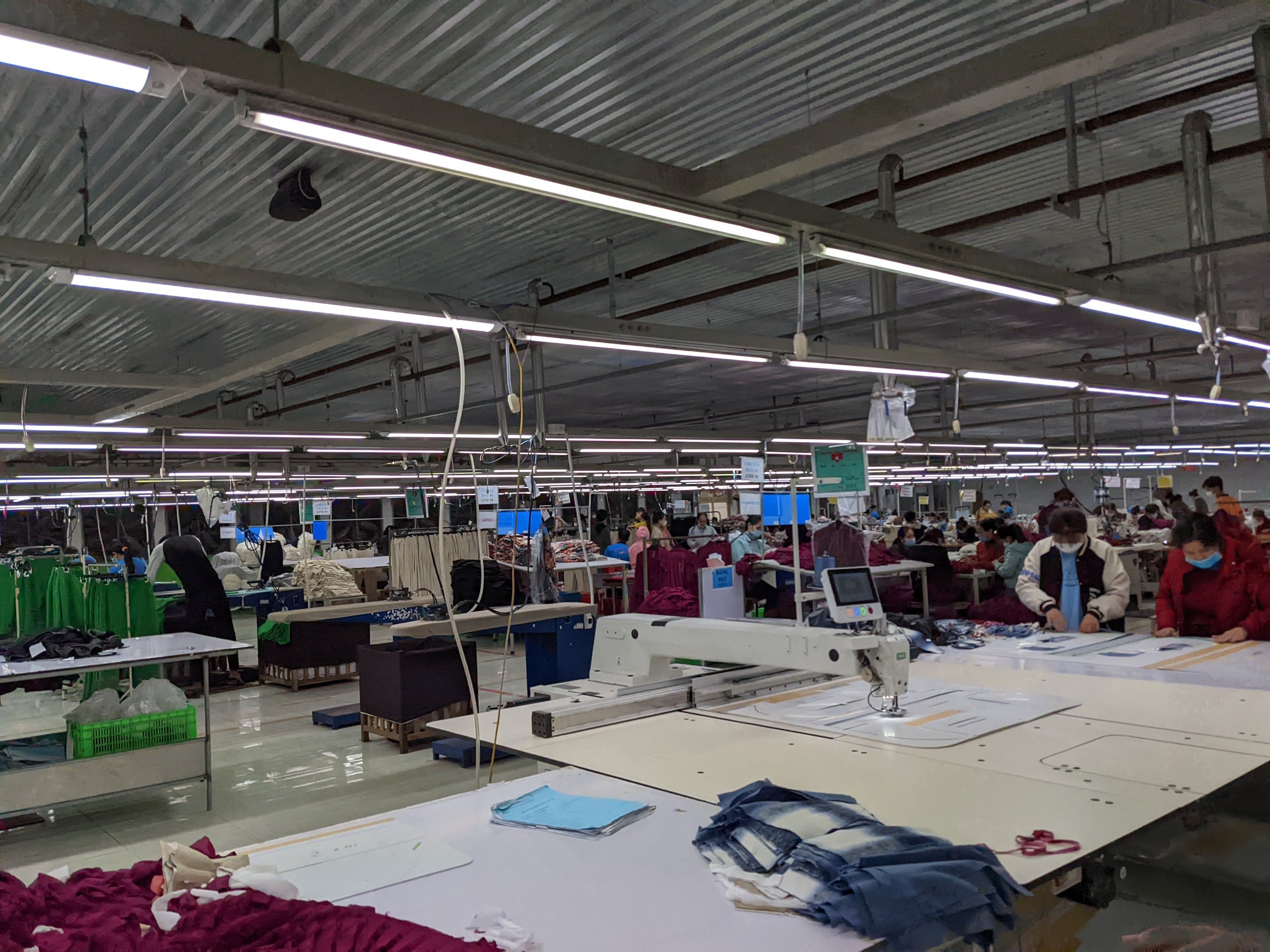
The production of Japanese knit garments is a blend of traditional skill and modern technology. Even in large factories, attention to detail is key.
Knitting
Machines are calibrated daily to ensure the right gauge and tension. Operators check for dropped stitches, holes, or uneven areas. Any defects found early are fixed before moving to the next step.
Dyeing And Finishing
This is where color fastness and hand feel are set. Dye baths are carefully measured, and fabric is tested for shade accuracy. Water used in dyeing is filtered and recycled where possible, reducing environmental impact.
Cutting And Sewing
Computer-controlled cutters improve precision. Skilled workers assemble pieces using specialized machines for different seam types (overlock, coverstitch, etc.). Every batch is checked for:
- Seam alignment
- Stitch density
- Loose threads
Final Inspection
Before packing, garments go through a detailed inspection. Quality controllers look for:
- Stains or marks
- Incorrect labels
- Inconsistent sizing
- Fabric flaws
Defective items are removed or reworked.
Here is a summary of the in-process quality checks at each stage:
| Stage | Main Checks | Responsible Party |
|---|---|---|
| Yarn Receipt | Fiber content, strength, color | Lab technician |
| Knitting | Stitch consistency, holes | Machine operator |
| Dyeing/Finishing | Color shade, fastness, softness | QC staff |
| Sewing | Seam quality, sizing | Line supervisor |
| Final Inspection | Overall appearance, labels | QC inspector |
Laboratory Testing And Certification
Many buyers require independent laboratory testing before accepting a shipment. Common tests for knit garments include:
- Color fastness to washing, rubbing, and light
- Dimensional stability (shrinkage/stretch)
- Pilling resistance
- Tensile and seam strength
- Chemical residue analysis
Samples are sent to labs like Boken Quality Evaluation Institute or SGS Japan. Products that pass receive certificates, which are shared with importers.
Voluntary Certifications
To boost credibility, many Japanese knitwear exporters seek additional certifications:
- OEKO-TEX® Standard 100: Ensures no harmful substances.
- ISO 9001: Confirms quality management systems.
- GOTS: For organic textiles.
These marks are often printed on swing tags or packaging, giving buyers extra confidence.
Sizing And Fitting Standards
Exported knit garments must fit customers in different regions. Japanese sizing is based on JIS L 4004 (for adults) and JIS L 4005 (for children), but must often be adapted for Western or Asian markets.
Manufacturers use body measurement data from target countries to adjust patterns. For example, US and European sizes are generally larger and longer than Japanese sizes for the same stated size (M, L, XL).
A common issue for exporters is mismatched sizing, which leads to returns and unsold stock. To avoid this, Japanese companies:
- Use regional fit models
- Offer detailed size charts
- Conduct wearer trials in the destination country
This attention to sizing helps maintain customer satisfaction and brand reputation.

Credit: www.dgjiayan.com
Environmental And Social Responsibility In Export Standards
Modern buyers demand more than just product quality—they want ethical and sustainable production. Japanese knitwear exporters are responding by:
- Using eco-friendly dyes and water-saving processes
- Sourcing organic or recycled fibers
- Ensuring fair labor practices and safe working conditions
- Reducing packaging waste
Some brands have adopted life cycle analysis to measure the environmental impact of each garment. Others participate in global initiatives like the Sustainable Apparel Coalition.
These efforts not only protect the environment, but also make Japanese knitwear more attractive in markets where consumers are willing to pay for sustainable fashion.
Common Quality Challenges And How Japan Addresses Them
Even with strict standards, problems can occur. Some common issues in knitwear export include:
- Color variation between batches
- Excessive shrinkage
- Pilling after a few washes
- Incorrect labeling or missing information
- Delayed shipping due to failed lab tests
Japanese companies address these challenges by:
- Keeping detailed production records for traceability
- Investing in staff training
- Using automated inspection systems (such as AI-based fabric scanners)
- Building strong relationships with raw material suppliers
- Setting up rapid response teams to fix problems before shipping
One non-obvious insight: Japanese manufacturers often keep a “golden sample”—a reference garment from the approved production run—to compare all future batches. This reduces disputes with buyers about color or fit changes.
Another key practice is pre-shipment audits by third-party inspectors, especially for large or first-time orders.
Unique Features That Set Japanese Knit Garments Apart
What really separates Japanese knitwear from other Asian exports is the combination of precision, consistency, and “invisible” quality. Here are some unique features:
- Fine gauge knitting: Japanese machines can produce ultra-fine knits not possible in many factories.
- Complex patterns and techniques: Advanced jacquard, intarsia, and 3D knitting.
- Anti-pilling finishes: Special treatments that keep garments looking new.
- Functional finishes: Odor control, UV protection, and quick-dry properties.
- Attention to packaging: Garments are folded neatly, with minimal creasing and clear labeling.
Japanese brands are also quick to adopt technology. For example, Shima Seiki and Brother are world leaders in computerized knitting machines, allowing for mass customization and rapid prototyping.
The Inspection And Export Process Step-by-step
For each export order, Japanese manufacturers follow a detailed process:
- Order Confirmation: Confirm specs, sizing, and standards with the buyer.
- Material Sourcing: Select and test yarns.
- Sample Approval: Make pre-production samples for buyer approval.
- Bulk Production: Begin knitting, dyeing, sewing.
- In-Process Quality Checks: Inspect at every stage.
- Lab Testing: Send samples to certified labs for required tests.
- Final Inspection: Inspect finished garments for appearance, fit, and labeling.
- Packing: Use export-grade materials and correct labels.
- Pre-shipment Audit: Sometimes done by third-party inspectors.
- Export Documentation: Prepare certificates of origin, test reports, and invoices.
- Shipping: Goods are dispatched by sea or air, depending on urgency.
Each step is documented and reviewed. If any issue is found, the shipment is delayed until it is fixed—no compromises.
Credit: www.cosmosourcing.com
Cost Implications Of High Quality Standards
Maintaining such high standards is not cheap. Japanese knit garments often cost 20-40% more than those from lower-cost countries. The reasons include:
- Higher labor costs
- More expensive raw materials
- Investment in technology
- Cost of certifications and testing
- Extra time for quality control
However, buyers are often willing to pay more for lower return rates, better brand reputation, and long-term customer loyalty. In many cases, the total cost of ownership is lower, as garments last longer and keep their appearance.
Here is a basic cost comparison:
| Factor | Japanese Knitwear | Typical Low-Cost Exporters |
|---|---|---|
| Labor Cost (per hour) | $12-18 | $1-5 |
| Material Sourcing | Premium/Certified | Mixed Quality |
| Testing/Certification | Mandatory/Voluntary | Basic/Optional |
| Return Rate | <1% | 3-7% |
The Future Of Japanese Knit Garment Export Standards
With new markets emerging and consumer demands changing, Japanese knitwear exporters continue to adapt. Key trends include:
- Smart textiles: Garments with sensors or health-tracking features
- Mass customization: Personalized sizing and design, enabled by digital knitting
- Greater sustainability: Carbon-neutral factories and closed-loop recycling
- Stronger traceability: Blockchain and digital tracking of materials
The Japanese government and industry groups are working together to update standards, train new workers, and promote exports through trade shows and marketing campaigns. Staying ahead means not just meeting today’s standards, but anticipating tomorrow’s.
For more on Japanese textile standards, the Japan Textile Industry Association provides in-depth resources.

Credit: www.nonameglobal.com
Frequently Asked Questions
What Is The Main Difference Between Japanese Knit Garment Quality Standards And Those Of Other Countries?
Japanese standards focus on precision, consistency, and safety. They require stricter testing for color fastness, shrinkage, and chemical safety. The use of advanced machinery and a culture of continuous improvement sets Japanese knitwear apart from many other exporters.
How Do Japanese Manufacturers Ensure Garments Do Not Contain Harmful Chemicals?
They use certified raw materials, follow safe dyeing processes, and conduct lab tests for substances like formaldehyde, heavy metals, and banned dyes. Many also obtain certifications such as OEKO-TEX® Standard 100 to prove their products are safe.
Are Japanese Sizes The Same As Us Or European Sizes?
No, Japanese sizes are often smaller. Exporters adjust patterns and use local measurement data to produce garments that fit customers in different regions. Detailed size charts and wearer trials help avoid sizing mistakes.
What Happens If A Japanese Garment Shipment Fails Quality Tests?
If garments fail lab tests or inspections, the shipment is held back. The manufacturer must fix the problem, retest, and get approval before exporting. This strict approach helps protect the reputation of Japanese knitwear.
Why Do Japanese Knit Garments Cost More Than Others?
Higher costs come from premium materials, skilled labor, advanced technology, and strict quality control. Buyers pay more upfront, but benefit from lower return rates and longer-lasting products, which can save money in the long run.
Japan’s knit garment industry stands as a model of how quality, tradition, and innovation can come together. For those buying or selling in the global market, understanding these standards is not just useful—it is essential to making informed, successful decisions.