
Exporting knit garments is a big business worldwide. But behind every shipment, there is a careful process called quality inspection. Without a strong inspection system, even the best factories can face rejected orders, returns, or damage to their reputation. For buyers and sellers, a quality inspection checklist for knit garments export is essential to make sure every piece meets strict standards before leaving the factory.
This guide explores every step in building a complete, practical inspection checklist. You’ll find expert advice, real-world examples, and key things that even experienced professionals sometimes miss. If you want your knitwear exports to stand out in a crowded market, understanding quality inspection is not optional—it’s your secret weapon.
Why Quality Inspection Matters In Knit Garments Export
Knit garments, like t-shirts, sweaters, and leggings, are popular because they are comfortable and flexible. However, their soft, stretchy fabric can easily hide or show defects. Even a small problem can turn into a big issue after the product reaches the customer.
A quality inspection checklist helps protect against:
- Customer complaints and returns
- Financial losses from rejected shipments
- Damage to brand image
It also builds trust with buyers. Many international clients, especially in the US and EU, expect strict inspection standards. In 2022, the global knitwear market was valued at over $90 billion, and about 30% of that was lost annually to quality issues and returns. A clear checklist helps reduce these losses.
Main Areas Of A Knit Garments Quality Inspection Checklist
Inspections cover more than just the finished product. They check materials, stitching, measurements, and even packaging. The main areas to include are:
- Fabric Quality
- Trims and Accessories
- Workmanship
- Measurement and Fitting
- Color and Shade Consistency
- Printing and Embroidery
- Labeling and Tags
- Packing and Presentation
- Carton and Shipping
- Special Buyer Requirements
- Documentation and Compliance
Let’s explore each in detail.
Fabric Quality
The fabric is the heart of any knit garment. If the fabric is wrong, nothing else can fix the problem.
Fabric Construction
Check the type of knit (single jersey, rib, interlock, etc.). Each buyer usually specifies what they want. Use a magnifying glass or pick glass to confirm the structure.
Fabric Gsm (grams Per Square Meter)
GSM is a measure of fabric weight. For example, a basic t-shirt might use 150-180 GSM fabric, while a hoodie could use 250-300 GSM. Inspectors should use a GSM cutter and digital scale to check if the fabric matches the order.
Common mistake: Not checking GSM after washing. Knit fabrics can shrink, so measure both before and after washing.
Fabric Defects
Look for holes, slubs (thick threads), yarn contamination, oil stains, or dye marks. Even a small defect can cause a return. Use a 4-point system to grade fabric rolls—this is the international standard.
Example: For a 100-meter roll, if total defects score more than 40 points, the roll is considered poor quality.
Fabric Color
Check color with a lightbox under different lighting (daylight, TL84, UV). This prevents surprises when garments reach stores.
Shrinkage And Torque
Test a piece by washing and drying as per care label. Measure shrinkage (should be within buyer’s tolerance, often 3-5%). Torque means fabric twisting—common in low-quality knits.
Trims And Accessories
Trims include buttons, zippers, labels, threads, and elastics. These small parts can cause big problems.
Trims Quality
- Check for rust, sharp edges, or broken parts.
- Zippers should open and close smoothly.
- Buttons should be firmly attached.
Color Matching
Trims should match the garment or follow the approved sample. Mismatched threads or buttons are a common reason for rejection.
Durability
For elastics, stretch and release several times to check recovery. For metal trims, perform a salt spray test if required.
Non-obvious insight: Sometimes, trims from different suppliers look the same but behave differently after washing. Always check wash performance.
Workmanship
This section checks how well the garment is made. Even with perfect fabric, poor sewing can ruin the product.
Stitch Quality
- Check for skipped stitches, loose threads, or broken seams.
- Common seam types in knits: Overlock, flatlock, coverstitch.
- Inspect stitch density (e.g., 10-12 stitches per inch is common for t-shirts).
Seam Strength
Perform a seam pull test: gently pull the seam apart. If stitches pop, the seam is weak.
Cleanliness
Remove any loose threads, stains, or oil marks before packing.
Symmetry
Check that sleeves, hems, and collars are even and match the approved sample.
Practical tip: Use a black light to spot oil or glue stains that are invisible in normal light.
Measurement And Fitting
Knit garments should be comfortable, but also fit as expected. Buyers often provide a measurement chart for each style and size.
Key Measurement Points
- Chest/bust
- Waist
- Length (body and sleeve)
- Shoulder width
- Armhole and cuff
Inspectors measure each point using a measuring tape and compare it to the chart.
Tolerance
Buyers usually allow some tolerance (e. g. , ±1 cm). If a size Medium t-shirt should be 100 cm chest, 99–101 cm is acceptable.
Size Grading
Check all sizes, not just one. Sometimes, only the sample size is correct, but other sizes are wrong.
Fitting Test
Some buyers ask for a fitting test on a mannequin or real model. This catches problems that measurements miss, like twisting or tight sleeves.
Non-obvious insight: Stretchy fabrics can be tricky; always measure garments lying flat, not hanging, for accurate results.
Color And Shade Consistency
Color is one of the first things buyers notice. Shade variation is a top reason for export rejections.
Shade Band Approval
Many buyers approve a shade band—a reference strip showing the lightest and darkest acceptable shades. Inspectors compare bulk production to this band.
Piece-to-piece Consistency
Lay out several garments side by side under standard lighting. Check for visible differences.
Lot-to-lot Variation
If production happens in batches, check that all lots look the same. This is especially important for large orders.
Staining And Color Fastness
Rub a white cloth on the fabric (dry and wet) to check for color transfer. Wash a sample garment to check if color fades.
Printing And Embroidery
Many knit garments have logos, prints, or embroidery. These decorations need special checks.
Print Quality
- Edges should be sharp, not blurry.
- No cracking, peeling, or missing areas.
- Colors should match the approved artwork.
Print Position
Use a measuring tape or template to check the print is in the correct spot (e. g. , 10 cm below neck seam).
Embroidery Quality
- No loose threads or skipped stitches.
- Back of embroidery should be neat, not scratchy.
- Design matches the approved sample.
Fastness Tests
For printed or embroidered areas, wash and rub tests check if colors last or bleed.
Non-obvious insight: Glitter or foil prints can look perfect when new but may wash off easily. Always do a wash durability test for special effects.
Labeling And Tags
Incorrect labels are a hidden risk in exports. Customs can stop shipments with wrong or missing labels.
Care Labels
- Must show correct washing, drying, and ironing instructions.
- Should be sewn in the right place (usually side seam or neck).
Size And Brand Labels
Check spelling, font, and position. A wrong label can mean a whole batch is unsellable.
Country Of Origin
Most countries require a “Made in [Country]” label. Wrong country labels can lead to legal trouble.
Barcode And Price Tags
If required, check that barcodes scan correctly and price tags match the order.
Practical tip: Use a barcode scanner app to test every size and color.
Packing And Presentation
How garments are folded and packed matters almost as much as how they are made.
Folding
Follow buyer instructions exactly. Some want t-shirts folded with the front showing, others want a special fold.
Polybag Packing
Check polybags for:
- Correct size and thickness
- Clear warnings (e.g., “keep away from children”)
- No holes or contamination
Carton Packing
Count the number of pieces per carton. Check for damage, wet spots, or weak corners.
Packing List
Make sure what’s inside matches the packing list: correct size, color, and quantity.
Common mistake: Mixing up sizes or colors in the same carton without clear separation.
Carton And Shipping
The outer carton is the garment’s first line of defense during shipping.
Carton Quality
Use strong, double-walled cartons for exports. Check for moisture, crushing, or old labels.
Sealing
Cartons should be sealed with strong tape. Some buyers ask for branded or security tape.
Marking
Cartons must show:
- Buyer’s name and address
- Style, size, color
- Quantity
- Carton number (e.g., 1/50, 2/50…)
All markings should match the order and be easy to read.
Loading
Check that cartons are stacked safely in the container. Avoid overloading or leaving space for movement.
Container Cleanliness
Before loading, inspect the shipping container for water, oil, or dirt.
Special Buyer Requirements
Some buyers have unique needs. Always read the buyer manual or order sheet carefully.
Eco-friendly Standards
Many brands now want organic cotton, recycled packaging, or chemical-free dyes. Ask for certificates and test reports.
Social Compliance
Some buyers require proof that factories follow labor laws (e. g. , no child labor). Auditors may visit the factory.
Restricted Substances
The EU and US ban certain dyes and chemicals. Check for test reports (e. g. , OEKO-TEX, REACH).
Security Tags
High-value items may need RFID or special tags to prevent theft.
Pro tip: Keep a checklist of buyer-specific rules for every order. Missing a small detail can lead to costly chargebacks.
Documentation And Compliance
Paperwork is just as important as the product.
Inspection Reports
Fill out a detailed inspection form, listing what was checked and any issues found.
Test Certificates
Attach lab test results for colorfastness, shrinkage, and restricted substances.
Shipping Documents
Check that invoices, packing lists, and certificates of origin are correct.
Photos
Take clear photos of defects, packing, and labeling for records.
Buyer Approvals
Keep records of all approvals (shade bands, samples, labels) to resolve any disputes later.
A Sample Knit Garments Inspection Checklist
Here is a practical example of how a real checklist might look for a typical export order:
| Inspection Item | Standard/Requirement | Result | Remarks |
|---|---|---|---|
| Fabric GSM | 180 ± 5 GSM | Pass | Measured 182 GSM |
| Fabric Defects | Max 4 points/yard | Pass | No major defects |
| Color Fastness | Grade 4-5 | Pass | No visible fading |
| Measurement | ±1 cm tolerance | Fail | Waist +2 cm |
| Labeling | As per buyer sample | Pass | All labels correct |
| Packing | 10 pcs/polybag | Pass | As per instruction |
| Carton Marking | Clear, correct | Pass | All correct |
A full checklist may run to several pages. Each point should be ticked or commented on by the inspector.
Comparing Major Knit Garments Defects
Understanding which defects are minor, major, or critical helps inspectors make the right decisions.
| Defect Type | Example | Severity | Action Required |
|---|---|---|---|
| Critical | Sharp metal in seam | Severe | Reject batch |
| Major | Hole in fabric, wrong label | High | Repair/replace |
| Minor | Loose thread, small stain | Low | Trim/clean |
Critical defects are unsafe or illegal, major defects affect appearance or function, and minor defects are cosmetic.
Key Statistics: Knit Garments Inspection
Here are some useful data points for exporters and inspectors:
| Inspection Step | Common Failure Rate (%) | Impact on Exports |
|---|---|---|
| Fabric Defects | 18% | Delays, extra costs |
| Measurement Errors | 12% | Returns, markdowns |
| Labeling Mistakes | 9% | Legal issues, rejection |
| Packing Errors | 7% | Damaged goods, chargebacks |
Source:
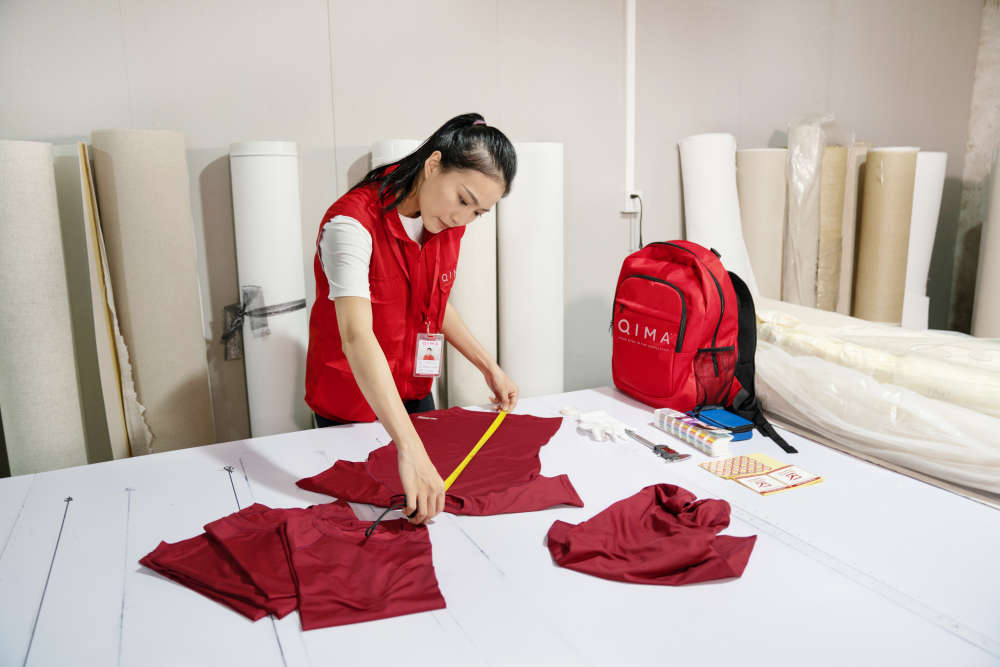
Credit: blog.qima.com
Two Non-obvious Insights For Beginners
- Inspection Should Start Early: Many new exporters wait until the garments are finished to start checking. But problems with fabric, trims, or labeling are much easier (and cheaper) to fix early in production. Always begin inspection at the fabric and accessories stage.
- Random Sampling is Not Enough: Some factories do “AQL” (Acceptable Quality Limit) random sampling. But for new styles, high-value orders, or special buyer requirements, it’s wise to check 100% of the goods. This extra step can prevent disasters.
Common Mistakes In Knit Garments Inspection
- Ignoring small stains or loose threads, thinking buyers won’t notice
- Not checking color under multiple light sources
- Relying only on factory QC reports without independent checks
- Forgetting to compare every batch to the approved shade band
- Packing in old or dirty cartons to save money
Avoid these mistakes to build a reputation as a reliable exporter.
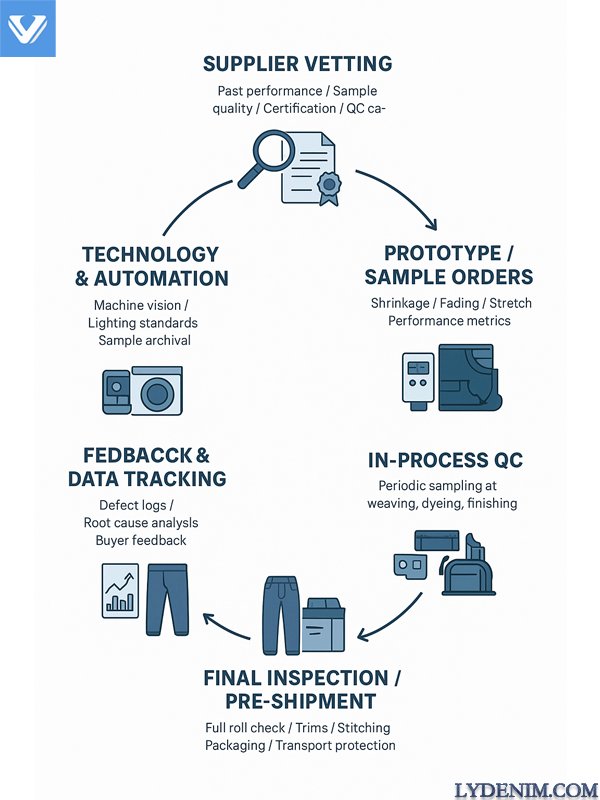
Credit: lydenim.com
Frequently Asked Questions
What Is The 4-point System In Fabric Inspection?
The 4-point system is an international standard for grading fabric defects. Inspectors assign points for each defect depending on its size and severity (1, 2, 3, or 4 points). A roll is accepted if the total points per 100 square yards do not exceed a set limit, usually 40 points.
How Can I Reduce Shade Variation In Knit Garments?
To reduce shade variation, always use fabric from the same dye lot for one order, mix rolls before cutting, and keep good records of approved shade bands. Consistent machine settings and careful batching also help.
Why Are Care Labels Important In Exports?
Care labels give washing and care instructions to the end customer. If labels are missing or incorrect, the buyer may reject the shipment or face legal action. Some countries have strict labeling laws.

Credit: www.qcadvisor.com
What Is Aql In Garment Inspection?
AQL stands for Acceptable Quality Limit. It is a statistical method for random sampling in quality inspection. For example, an AQL of 2.5% means that up to 2.5% of defects are allowed before a shipment is rejected.
Is It Necessary To Test Garments After Washing?
Yes, wash testing is very important. Washing can reveal problems like shrinkage, color fading, or twisting that are not visible in new garments. Always test samples before the final inspection.
Ensuring quality in knit garments export is not just about passing an inspection. It’s about building long-term trust with buyers and protecting your business from costly surprises. A strong, detailed inspection checklist is your best tool for success in the competitive world of global fashion exports.