
The garment export industry is highly competitive. Buyers want only the best, and even one small defect can lead to order cancellations or damage to a brand’s reputation. This is why the fabric inspection process is so important. Good inspection can save money, protect business relationships, and keep production running smoothly. Many factories want to improve quality, but only a few understand what a complete fabric inspection process looks like.
This article explains every part of fabric inspection for garment export quality, from basic concepts to advanced steps. Whether you work in a factory, manage quality control, or are new to textiles, you’ll find clear, practical guidance here. You’ll also discover real examples, common mistakes, and practical tips that are often missed by beginners.
What Is Fabric Inspection And Why Does It Matter?
Fabric inspection is the process of checking fabrics to find defects, measure quality, and decide if the material is good enough for production. It is the first and one of the most critical steps in garment manufacturing. If fabric issues are found early, factories can avoid bigger problems later, such as:
- Wasted production time
- Extra costs for repairs or replacements
- Rejected shipments by buyers
For export garments, the stakes are even higher. International buyers often have strict standards. A single rejected shipment can mean financial loss, loss of trust, and even legal problems.
Key Goals Of Fabric Inspection
- Detect defects: Spot holes, stains, color issues, and weaving problems.
- Check measurements: Make sure fabric width, length, and weight meet requirements.
- Assess color and appearance: Look for shade variations and dye problems.
- Decide usability: Approve, reject, or ask for replacements.
Types Of Fabric Defects
A well-trained inspector must know the different kinds of fabric defects. These can be divided into four main groups:
- Physical defects: Holes, slubs, broken yarns, thick or thin places.
- Color defects: Shade variation, dye stains, uneven coloring.
- Printing defects: Misalignment, blurred patterns, missing parts.
- Finishing defects: Uneven shrinkage, puckering, oil marks.
Each of these problems can affect the final garment’s quality. For example, a small hole may be hidden in a seam, but a large stain or color variation will be visible to customers.
Examples Of Common Fabric Defects
- Broken ends: Lines or gaps where yarn is missing.
- Weft bars: Horizontal stripes due to tension changes in weaving.
- Knots: Tied yarns causing bumps.
- Dye spots: Areas with darker or lighter color.
Some defects are easy to see, while others can be hidden. That’s why using both manual inspection and special equipment is important.
When And Where Fabric Inspection Happens
The fabric inspection process is not just one step. It happens at different times and places:
- At the supplier’s mill: Before shipping, mills often do their own quality checks.
- On arrival at the factory: Most garment factories inspect fabric before storing it.
- Before cutting: A final inspection is done right before fabric is cut for sewing.
By checking fabric at each stage, problems can be caught early. This reduces waste and keeps production on schedule.
Fabric Inspection Room Setup
A good fabric inspection room must have:
- Bright, even lighting (ideally 1000 lux or higher)
- Flat inspection tables or rolling machines
- Measuring tools for width and length
- Color assessment booth for shade checking
This setup helps inspectors see defects clearly and measure fabric accurately.
Step-by-step Fabric Inspection Process
To maintain export quality, factories use a detailed process. Here is a step-by-step guide:
1. Receive And Check Fabric Rolls
When fabric rolls arrive, record:
- Supplier name
- Roll number
- Fabric type
- Quantity (length, width, weight)
Check for obvious damage to rolls, like torn packaging, water stains, or color differences.
2. Prepare For Inspection
Let fabric relax for 24 hours to remove wrinkles and tension. This prevents false measurements during inspection.
3. Set Up The Inspection Equipment
Use a fabric inspection machine with moving lights and a flat viewing area. Make sure counters and odometers are reset to zero.
4. Inspect The Fabric
Unroll the fabric slowly (15-20 meters per minute). Check the full width and both sides. Mark any defects with stickers or chalk.
Look for:
- Holes, tears, and broken yarns
- Stains and oil marks
- Color variations and misprints
- Foreign fibers or threads
Record each defect with its position and type.
5. Measure Length And Width
Use calibrated measuring tapes or machine counters. Compare with the purchase order to ensure correct size.
6. Assess Color And Appearance
Check fabric under a color assessment light box (D65, TL84, etc.). Compare against approved shade standards.
7. Grade The Fabric Roll
Calculate penalty points using a grading system. Decide if the roll is accepted, rejected, or needs replacement.
8. Record And Report Results
Write an inspection report for each roll:
- Roll number
- Defects found
- Measurements
- Final grade
Send the report to the quality control team and management.
9. Store Or Return The Fabric
Accepted rolls go to storage. Rejected rolls are set aside for return or negotiation with the supplier.
Key Fabric Inspection Methods
There are several standard methods for fabric inspection. The most popular is the 4-Point System. Let’s compare the most common systems:
| System | How Points Are Given | When Used |
|---|---|---|
| 4-Point System | 1-4 points per defect based on size/severity | Woven and knitted fabrics |
| 10-Point System | 1-10 points per yard for specific defects | Mostly woven fabrics |
| Graniteville “78” System | Each defect has a code and penalty | Detailed mill inspections |
| Demerit Point System | Points for each defect; limits per roll | Knitted fabrics |
The 4-point System In Detail
This is the most widely used method for export garments. Points are given for each defect, based on its length:
- 1 point: 3 inches or less
- 2 points: 3-6 inches
- 3 points: 6-9 inches
- 4 points: Over 9 inches
For each 100 square yards, the total points are added. If the total is below a set limit (often 40 points), the fabric roll passes.
Example Calculation
Suppose a 50-yard roll has these defects:
- Three 2-inch holes (1 point each)
- Two 5-inch stains (2 points each)
- One 10-inch color bar (4 points)
Total points = 3 + 4 + 4 = 11 points. If the fabric area is 100 square yards, this roll passes most export standards.
Fabric Inspection Machines And Tools
Manual inspection is slow and can miss small defects. Modern factories use fabric inspection machines that:
- Unroll fabric at a steady speed
- Use bright, adjustable lighting
- Include counters for length and width
- Have defect marking systems
Some advanced machines use optical sensors or cameras to spot tiny flaws automatically. However, human eyes are still needed for final judgment, especially for color and subtle defects.
Essential Tools For Inspectors
- Measuring tapes (steel, fiberglass)
- Defect markers (stickers, chalk)
- Color shade cards
- Light boxes with different light sources
- Moisture meters (for special fabrics)
- Magnifying glasses (for fine defects)
Factories that invest in good equipment usually have fewer rejections and higher customer satisfaction.
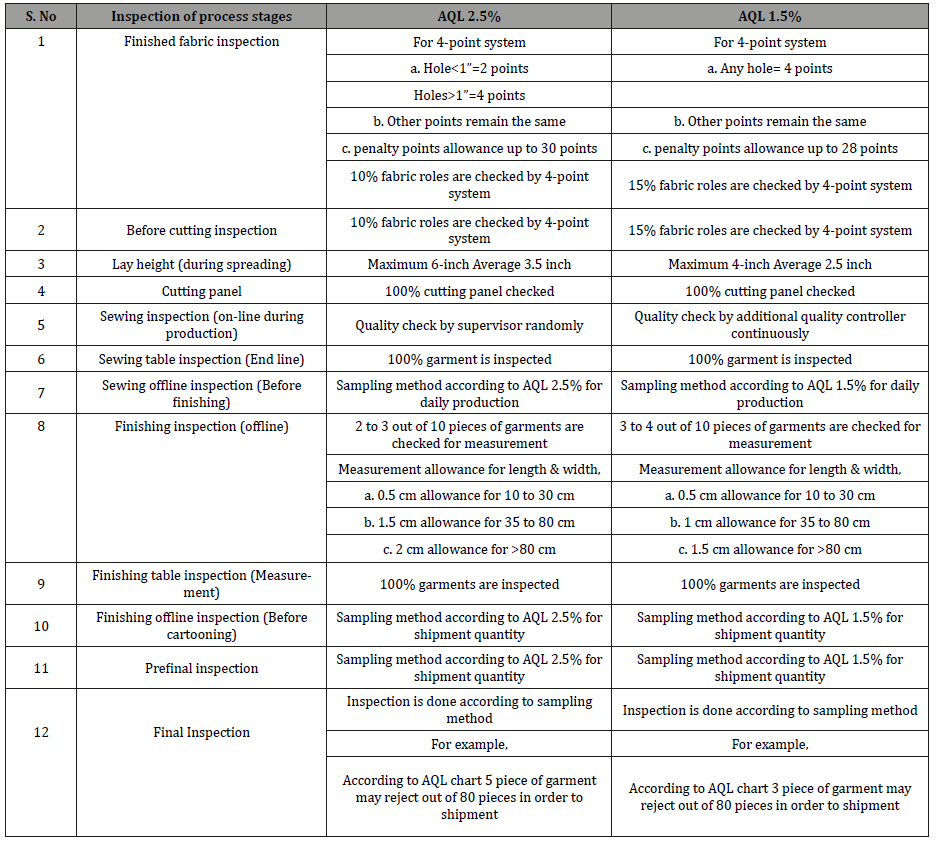
Credit: irispublishers.com
Grading And Acceptance Criteria
Every buyer sets their own fabric acceptance criteria. But there are some industry standards:
- Maximum points per 100 square yards: Usually 40 points or less
- Maximum defects per roll: Often 10 or fewer major defects
- No critical defects: Holes or shade variations in visible areas are not allowed
If a roll fails, factories can:
- Reject the roll and ask for replacement
- Negotiate a price reduction with the supplier
- Use the fabric for lower-grade products
Example: Export Buyer Requirements
A European buyer may specify:
- No more than 35 points per 100 square yards
- No holes larger than 0.5 cm
- Shade variation between rolls must be less than 5%
Meeting these standards is not just about passing inspection; it builds trust and repeat business.
Common Mistakes In Fabric Inspection
Even experienced factories make mistakes that cost time and money. Some of the most common are:
- Rushing the process: Skipping steps or inspecting too quickly leads to missed defects.
- Poor lighting: Shadows or uneven light can hide small problems.
- Not relaxing fabric: Measuring fabric under tension gives false results.
- Failing to check both sides: Some defects only show on the back.
- Not updating records: Without good records, repeating mistakes is likely.
A non-obvious mistake is relying only on supplier inspection. Even trusted mills can make errors or have shipping damage. Always inspect fabric again on arrival.

Credit: www.sciencedirect.com
Quality Control And Record Keeping
Record keeping is as important as the inspection itself. Good fabric inspection records include:
- Date, inspector’s name, and shift
- Supplier and lot numbers
- Roll numbers and quantities
- All defects found, with photos if possible
- Final grading and decision
These records help factories track supplier performance, solve disputes, and analyze trends.
Sample Fabric Inspection Record
| Roll No. | Inspector | Defects Found | Points | Status |
|---|---|---|---|---|
| R-1205 | Samir | 2 stains, 1 hole | 6 | Accepted |
| R-1206 | Leena | 1 shade bar, 3 slubs | 8 | Accepted |
| R-1207 | Samir | 1 large hole, 2 color spots | 15 | Rejected |
Training And Best Practices For Inspectors
The best inspection systems are only as good as the people running them. Factories should invest in inspector training. Good inspectors:
- Know all types of fabric defects
- Understand buyer requirements
- Use equipment properly
- Keep accurate records
Best practices include:
- Inspect at least 10% of each fabric lot (or more for critical orders)
- Rotate inspectors to avoid bias or fatigue
- Review rejected rolls with the supplier for improvement
A practical tip: Encourage inspectors to photograph unusual defects. These photos can help suppliers fix root problems.
Advanced Techniques: Automation And Digital Tools
New technology is changing fabric inspection. Some factories use automated vision systems. These systems use cameras and AI to:
- Scan the fabric at high speed
- Detect very small or hidden defects
- Save images and data for reports
While these systems are expensive, they can catch up to 99% of defects and work 24/7. For high-volume export factories, the investment can pay for itself quickly.
Digital record systems also help by:
- Tracking defect types and locations
- Linking data to supplier performance
- Generating instant inspection reports
Factories using automation should still have human inspectors for final checks and decisions.
How Fabric Inspection Affects The Whole Garment Process
Fabric quality affects every part of garment making:
- Cutting: Defects can cause waste or wrong patterns.
- Sewing: Holes or weak spots lead to stitching problems.
- Finishing: Stains or shade variations show in the final product.
If bad fabric is found after sewing, fixing it costs much more than catching it during inspection. That’s why good factories see fabric inspection as a key investment, not just a routine step.
Real-world Examples: Success And Failure
A leading Bangladesh garment exporter reduced buyer complaints by 60% after upgrading their inspection machines and retraining staff. They also saved $50,000 in one year by returning rejected rolls quickly, instead of using them in production.
On the other hand, a new factory tried to save time by skipping fabric inspection on small orders. They shipped garments with small stains and shade problems to a European buyer. The entire order was rejected, costing over $20,000 in lost business and shipping fees.
These examples show that investing in good fabric inspection pays off in the long run.
Fabric Inspection For Different Fabric Types
Different fabrics need different inspection focus:
- Knitted fabrics: Look for holes, ladders, and thick/thin places.
- Woven fabrics: Watch for broken ends, slubs, and weft bars.
- Printed fabrics: Check for misprints, blurred edges, and color fastness.
- Denim: Focus on shade uniformity and weaving defects.
- Technical fabrics: Check coating, waterproofing, and special finishes.
Some fabrics are more prone to certain defects. For example, polyester is sensitive to oil stains, while cotton can have more slubs and neps.
A non-obvious insight: Some defects, like oil stains, may not show up until after washing. Factories should sometimes do a wash test on suspicious rolls.
Credit: rsjqa.com
Working With Suppliers To Improve Fabric Quality
Building a partnership with suppliers can reduce defects. Good practices include:
- Sharing inspection data and photos
- Visiting mills for joint quality meetings
- Setting clear, written quality standards
- Giving feedback on rejected rolls
Strong supplier relationships can lead to fewer disputes and faster problem-solving.
Cost Of Poor Fabric Inspection
Poor inspection can have a big impact. Consider these costs:
- Rework and repair: Fixing defects after cutting is expensive
- Wasted materials: Up to 10% of fabric can be lost to defects
- Delayed shipments: Missing deadlines means penalties
- Lost business: Repeated quality problems can end buyer contracts
For example, in 2022, global apparel exports lost over $1 billion due to quality issues, much of it linked to poor fabric inspection (Fibre2Fashion).
How To Continuously Improve Fabric Inspection
The best factories do not just rely on one-time training. They:
- Review inspection data monthly to spot trends
- Test new machines and methods regularly
- Update defect libraries with new photos and examples
- Reward inspectors for finding hard-to-see defects
Continuous improvement keeps defect rates low and builds a culture of quality.
Frequently Asked Questions
What Is The 4-point System In Fabric Inspection?
The 4-Point System is a widely used method for grading fabric quality. Inspectors assign 1 to 4 points for each defect based on its size. Rolls with fewer than a set number of points per 100 square yards pass inspection.
How Much Fabric Should Be Inspected In Each Lot?
Most export factories inspect at least 10% of each fabric lot, sometimes more if the order is critical or the supplier has a history of problems. Some buyers may require 100% inspection for high-value products.
What Are The Most Common Fabric Defects Found In Export Garments?
The most common fabric defects are holes, stains, broken yarns, shade variations, and weft bars. The types and frequency depend on the fabric and production method.
Can Fabric Inspection Be Fully Automated?
Many factories use automated inspection machines with cameras and sensors. These can catch most defects, but human inspectors are still needed for final checks, color judgment, and subtle problems.
Why Is Record Keeping Important In Fabric Inspection?
Good records help factories trace problems, manage supplier performance, and prevent repeated mistakes. Records also protect factories in case of disputes with buyers or suppliers.
A strong fabric inspection process is essential for export-quality garments. It protects profits, keeps buyers happy, and builds a reputation for reliability. By following best practices, investing in training, and using the right tools, factories can reduce defects and improve quality year after year. In the fast-moving world of garment exports, inspection is not just a checkpoint—it’s a smart business strategy.