
The world of garment manufacturing is complex and full of specialized terms. Two such terms that often confuse newcomers are assortment packing and solid packing. These packing methods are essential parts of the apparel supply chain. They affect how products move from factories to stores, influence shipping costs, and even impact how garments are displayed to customers. If you want to succeed in the garment industry—whether as a manufacturer, merchandiser, or retailer—understanding the difference between assortment and solid packing is crucial.
Let’s dive deep into these two packing styles. We will explore their definitions, processes, pros and cons, industry examples, and the practical reasons why brands choose one over the other. By the end, you’ll have a clear understanding of how assortment packing and solid packing shape the journey of garments from production to point of sale.
What Is Assortment Packing?
Assortment packing refers to the method of packing garments in a single carton or box with different sizes and/or colors of the same style. For example, one carton may contain small, medium, and large sizes of a particular shirt, sometimes in multiple colors. This method is also called ratio packing, as it follows a pre-defined ratio or distribution.
Assortment packing is especially useful in situations where a store or retailer wants to display a variety of options as soon as the shipment arrives. It lets stores immediately fill their shelves with a balanced spread of products, which is crucial for customer satisfaction and fast sales.
How Assortment Packing Works
A brand or buyer provides a packing ratio, such as 2:3:3:2 for sizes S:M:L:XL. The packing team then fills each carton according to this ratio. This means every box shipped out is a mini representation of what the store will display on the shelf: a full range of sizes and sometimes colors for a single style.
For instance, suppose a client orders 1,000 t-shirts in four sizes (S, M, L, XL) and two colors (red, blue). The packing instruction could be:
- Each carton must contain 2S, 3M, 3L, 2XL in red and the same in blue.
This process can become more complex when there are more sizes or colors. Sometimes the ratio is adjusted based on previous sales data, or to match customer demand in different regions.
Another example: A children’s clothing retailer orders 600 dresses in three colors (pink, yellow, blue) and four sizes (2, 4, 6, 8). The ratio might be 1:2:2:1 for sizes, in each color. Packing teams must pay attention to these details to avoid mistakes.
Assortment packing can also include small accessories, like belts or scarves, with the main garment. In these cases, the assortment ratio may also cover accessory color or type to match the garments.
Why Do Brands Use Assortment Packing?
The main reason brands use assortment packing is to simplify stock management at the store level. Since each carton has a balanced mix of sizes (and sometimes colors), stores can quickly put out all the available choices. This reduces the need for unpacking and sorting, saving time and labor.
But there are deeper reasons as well:
- Quick Turnaround: Stores can replenish shelves faster, reducing the time between delivery and display.
- Standardization: Every store receives similar options, which is important for chain retailers with strict display guidelines.
- Reduced Lost Sales: Customers are less likely to leave because their size is missing from the new collection.
- Lower Initial Inventory Risk: When launching a new style, assortment packs let brands test demand without overstocking unpopular sizes.
Types Of Assortment Packing
- Size Assortment Packing: Each carton contains the same style and color but multiple sizes.
- Example: A carton with only black t-shirts, but in S, M, L, XL.
- Color Assortment Packing: Each carton contains the same style and size but multiple colors.
- Example: A carton with only size M shirts, but in red, blue, green.
- Size and Color Assortment Packing: Each carton contains different sizes and colors of the same style.
- Example: A box with red S, blue M, green L shirts of the same design.
There can be even more complex variations, like adding different fits (slim, regular) or lengths (short, long), but these are less common.
Example Of Assortment Packing
A common size ratio for men’s polo shirts may look like this:
- S: 2
- M: 3
- L: 3
- XL: 2
If a buyer orders 1,000 shirts, the manufacturer will divide the total into cartons, each following this ratio. This ensures every store receives a balanced selection.
Suppose each carton holds 10 shirts. The factory will pack each carton with 2S, 3M, 3L, 2XL shirts. If there are two colors, there might be separate cartons for each color, each with the same ratio. This approach helps retailers display a full choice for customers as soon as cartons are opened.
Non-obvious insight: In markets where foot traffic is unpredictable, assortment packing ensures that even smaller stores get a variety of options, making it less likely that customers will leave due to missing sizes.
What Is Solid Packing?
Solid packing is a more straightforward method. Here, each carton contains only one size and one color of a garment style. For example, a box might contain only medium-sized, black t-shirts of a specific design. There is no mix.
This method is also called single-size packing or single-color packing.
Solid packing is often used in larger supply chains, especially where high volume and precise inventory control are required. It is the default choice for automated warehouses, online retailers, and wholesalers.
How Solid Packing Works
The factory organizes finished garments by size and color. Each carton is filled with only one size and one color, as specified by the buyer. Packing instructions are simple: “Pack 25 pieces of size Large, black color, in each carton.” The process repeats for every size and color.
The process reduces the chance of confusion or errors during packing. Each carton only needs a single label, showing the style, size, and color. This makes it easy to pick, count, and check at every stage.
For example, if a retailer needs 200 pieces each of S, M, L, XL in black, and the carton holds 50 pieces, the factory will prepare four cartons per size (all black), total 16 cartons for all sizes and colors.
Solid packing is also much easier to automate with robots and warehouse management systems.
Solid packing can also help reduce mistakes during customs checks and international shipping. Since each carton is identical in content, it is easier to create accurate packing lists, invoices, and customs documents.
Why Do Brands Use Solid Packing?
Brands often use solid packing for logistics efficiency and inventory control. It is easier to count, track, and distribute inventory when each carton contains only one type of item. This method is common in e-commerce fulfillment centers, wholesalers, and brands that supply to other businesses.
Solid packing is especially valuable when:
- Order Sizes Are Large: For example, a warehouse needs 1,000 pieces of size M, blue t-shirts, and wants them together.
- Automation Is Used: Robots and conveyor belts work best with cartons containing identical items.
- Demand Is Predictable: If a store or warehouse knows exactly how many of each size/color sells, solid packing makes restocking simple.
- Drop Shipping and Direct-to-Consumer: For online orders, picking a specific size and color is faster from solid packs.
In some cases, brands use solid packing for initial bulk shipments, and then break down the cartons into assortment packs at regional distribution centers.
Non-obvious insight: Solid packing minimizes the risk of “phantom stock.” Phantom stock happens when inventory is in the store but cannot be sold because the needed size is missing from the display. With solid packing, stores can reorder and restock precisely what is missing.
Example Of Solid Packing
Imagine a buyer orders 2,000 t-shirts—1,000 in black and 1,000 in white. Each color is split into cartons of 50 pieces per size. Every carton contains only one size and one color, making it easy to count and distribute.
Suppose each color has 250 S, 250 M, 250 L, and 250 XL. For black, there will be five cartons of S, five of M, five of L, and five of XL (if each carton holds 50 pieces). The same applies for white.
This system makes inventory checks fast and ensures that if a retailer needs more size M, they can just order the M-size carton.
Key Differences: Assortment Packing Vs Solid Packing
Understanding the differences between these two packing styles is vital for efficient supply chain management. Here is a detailed comparison:
| Feature | Assortment Packing | Solid Packing |
|---|---|---|
| Contents per Carton | Multiple sizes/colors of one style | One size, one color per carton |
| Ease for Retailers | Ready to display, less sorting | May need sorting, more handling |
| Inventory Tracking | More complex | Simpler |
| Packing Complexity | High (must follow ratio) | Low (just count per carton) |
| Use Cases | Supermarkets, retail chains | E-commerce, wholesalers |
| Shipping Efficiency | Less optimal for large orders | Highly efficient for bulk |
| Space Utilization | May have empty space due to mixed items | Can maximize space (uniform cartons) |
| Labeling Requirements | Detailed (must list all included items) | Simple (one item description) |
| Risk of Packing Errors | Higher (complex ratios) | Lower (simple contents) |
It’s important to note that in both methods, careful documentation and labeling are required to avoid errors during customs checks, warehouse handling, and retail display.
Advantages Of Assortment Packing
Assortment packing brings several benefits, especially for retail outlets that want to offer a variety of options with minimal effort.
1. Store-ready Shipments
Each carton arrives with the right mix of sizes and/or colors. Staff can open the box and place items directly on shelves, saving time and reducing errors.
For example, a small retail store with limited staff can immediately fill racks with all sizes and colors, making the most of limited display space. This is especially helpful during busy seasons, like holidays, when stores need to put stock out quickly.
2. Balanced Display
Since every shipment has a pre-set ratio, stores never run out of certain sizes or colors too quickly. This leads to a better shopping experience for customers, as they find their size more often.
A balanced display also helps with visual merchandising. Customers see a full range of options, which encourages them to browse and buy.
3. Lower Handling Costs
Less sorting and rearranging mean lower labor costs for the retailer. It’s especially useful for stores with high staff turnover or limited manpower.
Non-obvious insight: In markets where minimum wage is high, this labor saving can be significant. Small stores can operate with fewer employees, focusing more on customer service.
4. Simplified Stock Replenishment
When re-ordering, stores can simply request another assortment pack. This makes inventory management more predictable.
Retailers don’t have to analyze which sizes are missing; they can just order the standard pack, confident it will refresh the display with the right mix.
5. Reduced Overstock Of Unpopular Sizes
By distributing sizes in the right ratio, retailers avoid excess stock of sizes that don’t sell well.
For example, if small sizes sell slowly, the assortment ratio can be adjusted based on past sales data. This helps avoid having too many leftovers at the end of the season.
6. Faster Season Changeover
When a new season starts, stores can quickly switch displays using assortment packs. There’s less old stock left behind, and new styles are visible to customers faster.
Disadvantages Of Assortment Packing
While assortment packing has benefits, it also brings challenges.
1. Packing Complexity
Packing teams must pay close attention to ratios. Mistakes can lead to shortages or oversupply of certain sizes, which is a common beginner error.
For example, accidentally putting three size S and two size XL instead of the instructed two S and three XL can throw off the stock balance for an entire store.
2. Inventory Control Issues
Tracking inventory is harder. If a store sells out of one size, the remaining sizes may linger on shelves, leading to slow-moving stock.
This can create “broken packs,” where only the least popular sizes are left. Retailers may have to discount these to clear space.
3. Less Flexibility For Stores
Some stores may need more of a specific size or color, but the fixed assortment ratio prevents them from customizing their orders.
For example, a store in an area with mostly young adults may need more medium sizes, but the assortment ratio may not match this demand.
4. Risk Of Mismatched Demand
If a store’s customer base prefers certain sizes, the pre-set ratio may not match local demand. This can lead to lost sales.
Stores may end up with unsold inventory, even if some sizes are selling out quickly.
5. Higher Chance Of Packing Errors
Assortment packing requires careful counting and cross-checking. Human error, especially in high-speed environments, can cause incorrect packs.
This can lead to disputes between retailers and suppliers, and additional shipping or returns to correct mistakes.
Advantages Of Solid Packing
Solid packing offers its own set of advantages, especially for large-scale operations and e-commerce.
1. Simpler Inventory Management
Each carton contains the same item, making counting and tracking much easier.
Warehouse teams can quickly scan and count inventory, reducing the chance of mistakes and making stock checks faster.
2. Flexibility In Distribution
Distributors can send exactly the quantities needed to different locations. If a store sells more large sizes, they can order just large cartons.
This avoids unnecessary leftovers and helps stores keep the right sizes in stock.
3. Less Packing Error
With only one size and color per carton, there’s less chance of packing mistakes.
Factories can automate the process, reducing the need for highly trained staff.
4. Easier Automation
Solid packing works well with automated warehouse systems, like robotic picking and conveyor belts.
Warehouses can use scanners and barcodes to track every carton, moving them efficiently from storage to shipping.
5. Efficient Bulk Handling
For warehouses and wholesalers, solid packing makes shipping and storage more space-efficient.
Cartons can be stacked neatly, making the most of pallet and container space.
6. Better For Restocking
When a store runs low on a specific size or color, they can reorder just what they need. This prevents stockouts and supports high-demand products.
Non-obvious insight: Solid packing is ideal for flash sales or online campaigns where a surge in demand for a specific size or color is expected. The warehouse can quickly ship out the needed items without repacking.
Disadvantages Of Solid Packing
Solid packing is not perfect for every situation.
1. More Work For Retailers
Stores need to sort and display sizes and colors themselves, which can increase labor costs.
This is especially challenging for small shops with limited staff or time.
2. Risk Of Unequal Stock On Shelves
If not managed well, some sizes may sell out quickly, leaving only unpopular sizes on display.
Customers may see empty spaces for popular sizes, which can discourage purchases.
3. Potential For Overstock
Distributors may overestimate demand for certain sizes or colors, leading to excess stock.
Solid packing makes it easy to order in bulk, but if sales predictions are wrong, warehouses can end up with unsold items.
4. Less Store-ready
Solid packed cartons aren’t ready for instant display. Staff must open and sort the contents.
This increases setup time, especially during busy seasons or new collection launches.
5. Higher Transportation Costs If Not Managed Well
If a store only needs a few of each size but must order full cartons of each, transportation costs may increase due to more frequent, smaller shipments.
When To Choose Assortment Packing
The choice depends on your business model and customer needs. Here are situations where assortment packing is the right choice:
- Retail chains that want quick shelf restocking
- Supermarkets or department stores selling garments off the rack
- Brands launching new styles and want to test the market with a balanced mix
- Pop-up stores and temporary outlets, which benefit from “ready-to-sell” assortments
Assortment packing is also useful for promotions or “starter packs” when opening new stores.
A practical example: A children’s clothing brand opening in a new city sends assortment packs to ensure every store can display all sizes and colors immediately. This maximizes sales from the first day.
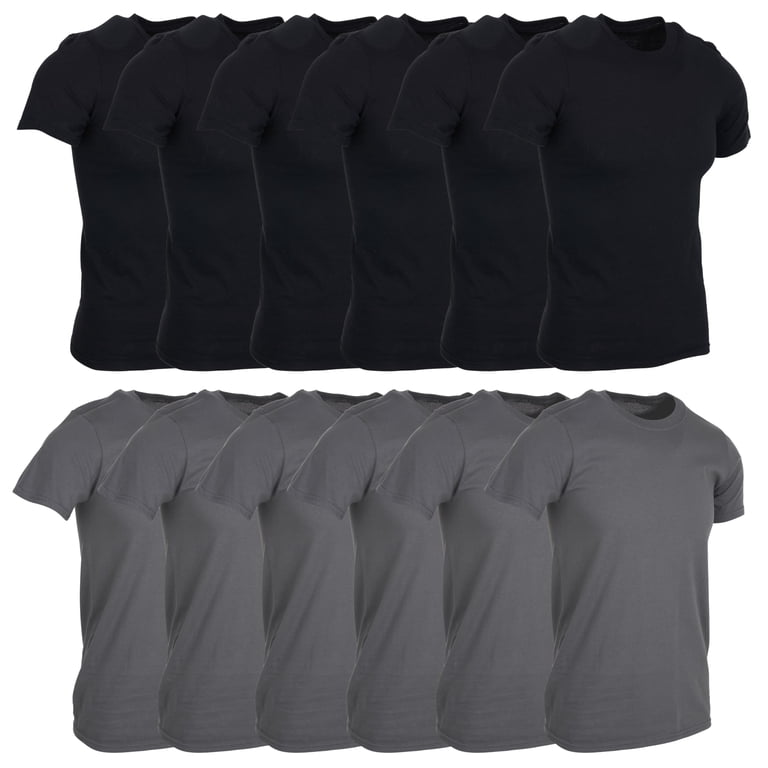
Credit: www.walmart.com
When To Choose Solid Packing
Solid packing is better for:
- Warehouses and distribution centers that handle large volumes
- E-commerce businesses where customers order specific sizes
- Wholesalers supplying to other businesses who want control over their stock
- Special events or campaigns where one size or color is in high demand
Solid packing is also a good choice when demand for certain sizes or colors is predictable.
For example, during a football season, a warehouse might stock only certain team t-shirts in popular sizes, packed solid for quick shipment to fans.
Real-world Examples
Let’s look at how major brands use these methods.
Example 1: H&m Retail Stores
H&M uses assortment packing for shipments to its retail outlets. Each store receives cartons with a pre-set mix of sizes and colors for new collections. This allows quick restocking and ensures customers have choices.
H&M’s visual merchandising teams can refresh displays quickly, keeping the store appearance consistent across locations. If a new collection launches worldwide, every store receives the same assortment, supporting brand consistency and marketing campaigns.
Example 2: Amazon Fulfillment
Amazon’s fulfillment centers use solid packing. When a customer orders a t-shirt in size L, only that size and color is picked from inventory. Cartons in the warehouse are filled with one size and color for fast, automated processing.
Solid packing lets Amazon handle millions of orders per day with minimal errors, and supports robotic picking systems. If a size or color runs low, inventory systems automatically reorder only what is needed.
Example 3: Sportswear Distributors
Sportswear brands often use a mix. For retail stores, they use assortment packing for display. For wholesale or online sales, they use solid packing for efficiency.
For example, Adidas might send assortment packs to retail partners for their flagship stores, and use solid packing for shipments to online marketplaces or team orders.
Example 4: Fashion Franchises
Global franchises like Zara use advanced analytics to decide the mix. In some markets, they send assortment packs to smaller stores, and solid packs to large flagship or outlet stores, matching local demand and sales patterns.
How To Decide The Best Packing Method
Choosing between assortment packing and solid packing is not always easy. Here are the main factors to consider:
1. Customer Type
- Retail stores: Usually benefit from assortment packing.
- Online customers: Prefer solid packing, as they buy specific sizes.
If you supply both, consider a hybrid approach.
2. Order Volume
- Small orders: Assortment packing can be efficient.
- Large orders: Solid packing is better for bulk handling.
For example, a small boutique may want assortment packs, while a big-box retailer may prefer solid packs for their central warehouse.
3. Warehouse Setup
- Manual systems: Assortment packing can save time.
- Automated systems: Solid packing works best.
If you’re investing in robotics or conveyor belts, solid packing will support your technology better.
4. Market Trends
- If your market has strong preferences for certain sizes, solid packing gives you flexibility.
- If you need to display a full range, go with assortment.
Use sales data to spot trends and adjust packing methods.
5. Cost Considerations
- Assortment packing can increase labor costs in the factory.
- Solid packing may increase labor at the store.
Calculate total landed costs, not just shipping or packing.
6. Seasonality
During peak seasons, speed to shelf matters. Assortment packs can help retailers get products out quickly, while solid packs may be better for off-season restocking.
7. Regulatory Requirements
Some countries or retailers require specific labeling or documentation. Solid packing often simplifies compliance.
Common Mistakes And How To Avoid Them
Both methods have risks. Here are mistakes to watch out for:
Mistakes In Assortment Packing
- Ignoring Local Demand: Using the same ratio for all stores, even when some locations sell more of a certain size.
- Poor Ratio Planning: Not analyzing past sales data before setting the ratio.
- Inaccurate Packing: Human error in assembling assortment cartons, leading to customer complaints.
- Lack of Communication: Not informing retailers about the ratio, causing confusion at the store.
How To Avoid
- Analyze sales trends for each store.
- Adjust ratios based on local demand, if possible.
- Use clear, printed packing lists and double-check contents.
- Communicate ratios and packing plans to all parties.
Mistakes In Solid Packing
- Overlooking Store Needs: Sending only solid packs to stores that need variety for displays.
- Inventory Buildup: Overstocking unpopular sizes because it’s easier to order in bulk.
- Shipping Too Many Cartons: Not optimizing shipment sizes, leading to higher transport costs.
How To Avoid
- Offer both packing options where needed.
- Monitor sales and adjust order quantities regularly.
- Work with logistics partners to optimize shipment sizes.
Non-obvious insight: If you’re new to packing, start with a small pilot shipment and review the results. Adjust your method before scaling up.

Credit: www.amazon.com
Impact On Supply Chain And Logistics
Packing methods affect the entire supply chain, from factory to final sale.
1. Shipping Efficiency
- Solid packing is more efficient for container loading and pallet stacking.
- Assortment packing can create odd-sized shipments, leading to wasted space.
- Shipping costs may be higher with assortment packing if cartons are not filled optimally.
2. Customs And Documentation
- Solid packing simplifies documentation, as each carton is identical.
- Assortment packing requires detailed itemization.
For international shipments, solid packing can speed up customs clearance.
3. Receiving Process
- Assortment packs are faster to unpack and display.
- Solid packs require sorting, slowing down the process.
4. Loss And Damage
- Assortment packing can lead to more “broken packs” if a carton is damaged, affecting multiple sizes/colors.
- Solid packing localizes damage to one size/color, making loss assessment easier.
5. Reverse Logistics
Returns are easier to process with solid packing, as items go back into the warehouse without sorting. Assortment returns may require repacking or splitting.
Cost Analysis: Which Method Saves Money?
Cost is a major factor in choosing a packing method. Let’s compare the cost drivers.
| Cost Factor | Assortment Packing | Solid Packing |
|---|---|---|
| Packing Labor (Factory) | High (needs sorting) | Low (simple packing) |
| Shipping Cost | Potentially higher (less dense cartons) | Lower (optimizes space) |
| Receiving Labor (Store) | Low (unpack and display) | High (requires sorting) |
| Inventory Holding | Complex tracking | Simpler tracking |
| Stockout Risk | Medium (fixed ratios may miss demand) | High (if not monitored) |
| Return Handling | Complex (may require repacking) | Simpler (just restock the carton) |
| Labeling/Compliance | More detailed, higher cost | Simpler, lower cost |
The best choice depends on your specific cost structure. Many brands run both methods and monitor total costs per channel.
Quality Control In Packing
Quality control is essential, especially in assortment packing. One common problem is packing errors, such as the wrong size or color mix. This can lead to customer complaints and returns.
How To Ensure Quality
- Use clear, printed packing lists.
- Double-check ratios before sealing cartons.
- Train staff carefully in packing procedures.
- Use barcode or RFID scanning for accuracy.
- Set up a final inspection checkpoint before shipping.
For solid packing, the risks are lower, but errors can still occur. Always verify that cartons are labeled correctly.
Non-obvious insight: Some factories use “weight checks”—if the weight of a packed carton does not match the standard weight for that assortment, it signals a possible packing error.
Technology And Automation
Modern garment factories use technology to reduce errors and improve efficiency.
Automation In Solid Packing
- Conveyor belts and robotic arms can sort and pack garments.
- Barcode systems track each carton.
- Automated guided vehicles (AGVs) move cartons from packing to shipping.
Automation In Assortment Packing
- Computerized picking systems help workers select the right mix.
- Packing software can generate packing lists and labels.
- Some systems use light guides to show staff which sizes/colors to pick.
While solid packing is easier to automate, new technologies like AI and image recognition are making assortment packing more accurate and less labor-intensive.
Sustainability And Environmental Impact
Packing methods also affect the environment.
1. Carton Usage
- Solid packing uses fewer carton types but may lead to more partial loads.
- Assortment packing can reduce the total number of cartons but sometimes uses more complex materials (extra dividers, etc).
2. Shipping Efficiency
Efficient packing means fewer shipments and lower carbon emissions. Solid packing often allows trucks and containers to be filled more efficiently.
3. Waste
Incorrect packing (wrong ratios or overstock) leads to unsold goods and waste. Careful planning reduces this risk.
4. Eco-friendly Materials
Some brands are moving to reusable or recycled cartons, especially for assortment packing. This requires good carton management and returns systems.
5. Return Logistics
Assortment packing can complicate returns, as each returned carton may contain a mix of sizes and colors, making resale harder.
The Role Of Packing In Brand Image
How garments are packed affects the brand image.
- Assortment packing gives a “ready to shop” experience, which is valued by high-street retailers.
- Solid packing is seen as efficient and professional, important for e-commerce and B2B clients.
Poor packing (mixed up sizes, damaged goods) can hurt reputation. Investing in good packing pays off in customer satisfaction.
For example, a luxury brand will often use high-quality, branded assortment packs for their retail stores, creating a premium unboxing and display experience.
Legal And Compliance Issues
Different countries have regulations about labeling and packaging, especially for imported garments.
- Assortment packing may require detailed labels listing all included sizes and colors.
- Solid packing needs only simple labeling, reducing compliance risks.
In some markets, there are rules about packaging waste, carton size, or labeling language. Always check local laws and retailer requirements before shipping.
For example, the European Union has strict rules on packaging waste and recycling. Brands exporting to the EU must ensure their cartons are compliant, or risk fines and delays.
Non-obvious Insights For Beginners
1. Packing Affects Returns
A surprising number of garment returns are due to packing errors—not product faults. For example, a customer orders a medium but receives a large because of a packing mix-up. Strong quality control in packing reduces costly returns.
2. Packing Influences Display Strategy
Retailers often plan store displays around how goods arrive. If you send solid packs, they may need extra storage space for unopened sizes. If you use assortment packs, displays can be refreshed instantly. This impacts everything from store layout to sales performance.
3. Hybrid Approaches Are Growing
Many brands now combine both methods. For example, they ship assortment packs for new launches, then switch to solid packs for replenishment based on sales data. This balances speed and flexibility.
4. Packing Can Support Marketing
Some brands use special assortment packs for promotions or seasonal collections, making it easy for stores to set up themed displays.
Case Study: Launching A New Fashion Line
Suppose a brand is launching a new women’s blouse line. The initial shipment goes to 100 stores. The brand must decide: assortment or solid packing?
- If the goal is fast shelf display and customer choice, assortment packing is ideal.
- If the plan is to analyze which sizes/colors sell best, solid packing allows detailed tracking.
Many brands use assortment for the first shipment, then switch to solid packing for restocking, based on sales data.
For example, after the first month, the brand reviews sales and finds that size M in blue is selling fastest. They then ship more solid packs of this size/color to stores, avoiding overstock of slow-moving items.
Best Practices For Packing In Garments
To ensure efficient operations:
- Analyze Sales Data: Use past data to set ratios for assortment packing.
- Customize Where Possible: Offer different ratios or packing options for different regions.
- Invest in Training: Packing teams should be well-trained to avoid mistakes.
- Audit Regularly: Check packing accuracy often to catch errors early.
- Communicate Clearly: Ensure all instructions are easy to understand for packing staff.
- Label Properly: Use clear, durable labels that won’t fall off during shipping.
- Use Technology: Invest in barcode or RFID systems to reduce manual errors.
- Review and Adapt: After each season, review what worked and adjust packing methods for the future.
Future Trends In Garment Packing
The garment industry is changing fast. Here’s what’s coming:
- More Automation: Robotic systems for both packing methods.
- Smart Packaging: Use of RFID tags and QR codes for tracking.
- Sustainable Materials: Eco-friendly cartons and less plastic.
- On-Demand Packing: Packing methods tailored to real-time sales data.
- Customizable Packs: Technology that allows stores to request specific ratios or mixes.
- AI-Based Forecasting: Using artificial intelligence to predict which sizes or colors will sell, and adjusting packing accordingly.
Brands that adapt to these trends will gain efficiency and boost customer satisfaction.
Frequently Asked Questions

Credit: miraclebabyusa.com
What Is The Main Purpose Of Assortment Packing In Garments?
Assortment packing is used to make it easy for retailers to display a full range of sizes and colors with minimal effort. Each carton contains a pre-set mix, so staff can quickly put products on shelves without sorting. This is ideal for stores that want to offer variety and save on labor costs.
How Does Solid Packing Benefit E-commerce Businesses?
Solid packing is perfect for e-commerce because customers usually buy specific sizes and colors. Each carton contains only one size and one color, making order fulfillment faster, simpler, and less prone to mistakes. It also works well with automated warehouse systems.
Can A Brand Use Both Assortment And Solid Packing For The Same Product?
Yes, many brands use both methods for the same product. For example, they may send assortment packs to retail stores and solid packs to online warehouses. This allows them to match packing methods to the needs of different sales channels.
How Do Packing Methods Affect Shipping Costs?
Solid packing often optimizes shipping space better, lowering costs for bulk orders. Assortment packing may lead to less efficient use of space, especially if cartons are not filled completely. However, assortment packing can reduce labor costs at the destination by making stock ready for display.
Where Can I Find More Detailed Industry Standards For Garment Packing?
For official standards and further reading, you can visit the Wikipedia page on packaging and labeling. This source covers general packaging practices, regulations, and industry norms.
Garment packing is more than just putting clothes in a box—it’s a strategic choice that affects every part of the supply chain. By understanding the differences between assortment packing and solid packing, you can make better decisions for your business, improve efficiency, and deliver a better experience to your customers.