
Export Packing List For Garments With Size Breakdown
Exporting garments is a complex process with many steps. One of the most important documents is the export packing list. This list helps everyone involved understand what is being shipped, how it is packed, and the size breakdown of the garments. If you are new to exporting or want to improve your process, learning how to make a clear, correct packing list is essential.
Many people think packing lists are simple. But for garments, they are more detailed than usual because buyers need exact information about quantities, sizes, and packaging. Mistakes can lead to shipment delays, customs issues, and unhappy customers. In this article, you will learn everything you need to know about making an export packing list for garments, including size breakdowns, why they matter, common challenges, and practical examples.
You will also see real data and comparisons to make the topic easy to understand.
What Is An Export Packing List?
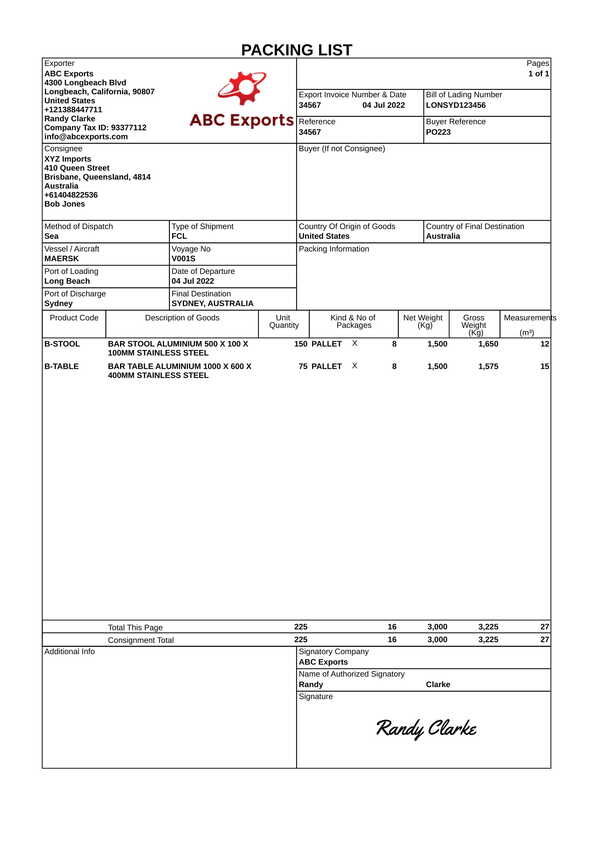
An export packing list is a document that shows what is inside every shipment carton or package. It lists all items, quantities, weights, measurements, and sometimes values. For garments, the packing list also includes a size breakdown, showing how many pieces of each size are in each carton.
The packing list is used by:
- Exporters (to organize shipments)
- Buyers (to check received goods)
- Customs (to inspect and clear shipments)
- Freight forwarders (to plan transport)
- Warehouse teams (to handle products)
It is different from the commercial invoice (which shows prices) and the bill of lading (which confirms shipment). The packing list focuses on physical details, not payment.
Understanding the role of a packing list is key to smooth exporting. For example, imagine you are sending 5,000 t-shirts to a retailer. Without a packing list, the buyer might not know how many small, medium, large, or extra-large shirts are inside each box.
Customs might not know how many boxes are supposed to arrive. If even one box is missing or contains the wrong sizes, the buyer may refuse the shipment or ask for compensation. The packing list prevents these problems by showing exactly what is inside each carton.
Another non-obvious insight: Packing lists can be used for internal audits. Before shipping, companies often compare the packing list to their inventory to spot discrepancies and fix them before they become bigger issues.
Why Is The Packing List Important For Garment Exports?
Garments come in many sizes, colors, and styles. Buyers usually order different sizes to fit their customers. If the packing list is wrong, it can cause problems like:
- Wrong sizes delivered (customers are unhappy)
- Customs delays (documents do not match shipment)
- Inventory errors (warehouses cannot track goods)
- Financial losses (returns, re-shipment, fines)
A correct packing list helps everyone trust the shipment, speeds up customs clearance, and reduces risks.
Key Roles Of The Packing List
- Customs Clearance: Customs officers check the packing list against the shipment. If sizes or counts are wrong, the shipment may be delayed or fined. For example, if a carton marked as containing 30 medium shirts actually contains 25, customs may suspect mis-declaration or fraud. This can lead to inspections, delays, or even seizure of goods.
- Buyer Verification: Buyers use the packing list to check if they received the right sizes and quantities. Retailers depend on these lists to restock shelves and meet customer demand. If the packing list says 100 small shirts but only 80 arrive, buyers will file complaints.
- Warehouse Management: Warehouse teams use the size breakdown to store and pick garments correctly. Accurate packing lists allow warehouses to organize stock by size and style, speeding up order fulfillment.
- Claims and Disputes: If there is a problem, the packing list is used to resolve complaints or insurance claims. Without a clear packing list, it is hard to prove what was shipped and what was lost or damaged.
A practical example: A retailer receives a shipment and finds that the sizes do not match the packing list. They can use the packing list as evidence when contacting the exporter or filing an insurance claim. This document is also used to prove what was shipped in legal or commercial disputes.
Typical Structure Of A Garment Packing List
A garment packing list is more detailed than lists for other products. It usually includes:
- Exporter and Consignee details
- Invoice and shipment numbers
- Description of goods (style, color, fabric)
- Carton numbers
- Quantity per carton
- Size breakdown per carton
- Total pieces per size
- Gross and net weight
- Measurements of cartons
- Total cartons and pieces
Here is a basic example of the structure:
- Exporter: ABC Garments Ltd.
- Consignee: XYZ Retail Inc.
- Invoice No. : 2024/123
- Shipment Date: June 15, 2024
- Description: Men’s T-Shirts, 100% Cotton, Red
- Carton No. : 1–10
- Quantity per carton: 50 pcs
- Size Breakdown: S-10, M-15, L-15, XL-10
- Gross Weight: 15 kg
- Net Weight: 14 kg
- Carton Dimension: 60x40x30 cm
A packing list for garments must be clear and readable. Mistakes in carton numbers or quantity can cause confusion. For instance, if carton numbers repeat (e. g. , two cartons both labeled “3”), the warehouse team may misplace or mix up the cartons.
Always use unique carton numbers and double-check every entry.
When describing goods, avoid vague terms like “assorted shirts. ” Specify style numbers, colors, fabric types, and collection names. This helps buyers and customs identify the exact product.
Another helpful insight: Some exporters add extra columns for barcode numbers or batch numbers. This allows easier tracking and scanning at warehouses.
Detailed Breakdown: What To Include In The Packing List
Exporter And Consignee Information
Always include full names, addresses, and contact details. This helps in tracking and communication. For example, if a shipment is delayed, customs officials can contact the exporter or the consignee directly using the details provided. It also ensures that if there is any question about the shipment, the right people can be reached quickly.
Some exporters also include email addresses and phone numbers to speed up communication. If you are exporting to a new buyer, make sure to double-check their address and contact details to avoid delivery errors.
Invoice And Shipment Numbers
These numbers link the packing list to other documents. They help customs and buyers match records. If there is a dispute about payment or delivery, these numbers provide proof of which shipment and invoice the packing list refers to.
Always use the same invoice and shipment numbers across all documents. This prevents confusion and makes it easier to trace the shipment history.
Product Description
Describe the garment clearly. Include:
- Style number
- Fabric type
- Color
- Brand (if any)
- Season or collection
For example: “Style 3210, Women’s Blouse, Polyester, Navy Blue, Spring 2024”
Giving detailed product descriptions prevents mistakes. If a buyer orders blue shirts but receives navy blue, they may reject the shipment. Be specific about color shades, fabric blends (e. g. , 60% cotton, 40% polyester), and any special features like embroidery or prints.
If you are shipping multiple styles or colors, list each one separately in the packing list.
Carton Numbers
Each carton must have a unique number. This makes it easy to track which carton contains which sizes. For large shipments, carton numbers often run into the hundreds or thousands.
Some exporters use codes like “C-001,” “C-002,” etc. , to make tracking easier. Avoid reusing carton numbers for different shipments, as this can confuse warehouse staff.
Quantity Per Carton
Write the number of pieces in each carton. For garments, this can change depending on the size assortment.
For example, if a carton contains only large shirts, you may fit 45 pieces. If it contains assorted sizes, the number may be lower due to differences in garment size and packing density.
Always state the exact number in each carton, not just the average. This helps buyers and customs check the shipment easily.
Size Breakdown Per Carton
This is the most important part for garments. Buyers want to know exactly how many pieces of each size are packed in each carton. For example:
Carton 1: S-10, M-15, L-15, Xl-10
Carton 2: S-5, M-20, L-15, Xl-10
Clearly list the sizes and quantities. Some buyers require the breakdown in both numbers and percentages (e. g. , S-10 pcs, 20%).
If you are shipping kids’ garments or garments with many sizes, include all sizes (e. g. , XS, S, M, L, XL, XXL).
Total Pieces Per Size
Add up all the cartons to show total quantity for each size:
- S: 15
- M: 35
- L: 30
- XL: 20
This helps buyers and warehouses plan inventory. If the buyer needs 200 medium shirts but the total is only 180, they may complain.
Some exporters also include grand totals at the end of the packing list for easy reference.
Gross And Net Weight
Gross weight is the total weight including packaging.
Net weight is the weight of garments only.
Always check weight with a reliable scale. Some buyers use weight to estimate shipping costs. Customs also use weight to check for under-declared shipments.
If cartons are heavy, note any special handling instructions (e. g. , “Lift with care, carton over 20kg”).
Carton Dimensions
List the length, width, and height in centimeters or inches. This helps in transport planning. For example, freight forwarders need dimensions to plan cargo space and calculate shipping rates.
If cartons are not standard sizes, mention this clearly. Odd-size cartons may require special handling or extra fees.
Total Cartons And Pieces
At the end, add the grand total:
- Total cartons: 10
- Total pieces: 500
This summary helps buyers, customs, and warehouse teams check the shipment quickly.
Some exporters also add a summary of total gross and net weight.
Size Breakdown: Why It Matters
Size breakdown is critical because garment buyers usually order many sizes, not just one. If the size breakdown is wrong, the buyer may not get the sizes they need for their market.
For example, an order may look like this:
- S: 20%
- M: 30%
- L: 30%
- XL: 20%
If the packing list shows different percentages, it can cause big issues. Buyers need this information to plan their sales and inventory.
Common Size Breakdown Formats
- Ratio packing: Sizes are packed in a fixed ratio (e.g., 1:2:2:1 for S:M:L:XL).
- Solid size packing: Each carton contains only one size.
- Assorted size packing: Each carton contains a mix of sizes.
Using the right format is important for buyer satisfaction and warehouse management. For example, ratio packing is easy for buyers who need to refill stores with a standard mix. Solid size packing is useful for buyers who want to stock only one size per location.
Assorted size packing is common for smaller orders or boutique stores. It allows buyers to offer all sizes in a small quantity.
Some buyers specify their preferred packing method in the purchase order. If you pack in the wrong format, buyers may reject the shipment.
A non-obvious insight: In some cases, buyers use size breakdown data to plan promotions or sales. If certain sizes are overstocked, they may discount those sizes to clear inventory.
How To Create A Packing List For Garments
Making a packing list is not just about listing items. You need to follow step-by-step procedures to ensure accuracy.
Step 1: Collect Order Information
Get the purchase order from the buyer. Check:
- Style numbers
- Colors
- Size ratios
- Total quantity
Review every detail in the purchase order. If buyers change their order after confirming, update the packing list accordingly.
Sometimes, buyers request changes in size breakdown just before shipment. Always confirm these changes in writing to avoid disputes.
Step 2: Plan Carton Packing
Decide how many cartons are needed. Plan size breakdown for each carton:
- If ratio packing: Divide total quantity by ratio.
- If solid size: Count pieces per size and pack accordingly.
- If assorted: Mix sizes according to buyer instructions.
Use standard carton sizes if possible. This helps optimize transport and reduces shipping costs.
If shipping fragile or high-value garments, use stronger cartons and note this in the packing list.
Step 3: Prepare Data
Use a spreadsheet to record:
- Carton number
- Size breakdown
- Quantity
- Weight
- Dimensions
Spreadsheets help avoid calculation errors. Some exporters use software that auto-generates packing lists from order data.
Always record data in a format that is easy to check and share. Digital records are easier to update and send to buyers.
Step 4: Double-check Calculations
Many exporters make mistakes with size breakdown math. Always check totals:
- Each size total matches the order
- Carton totals add up to shipment total
Ask another staff member to review the packing list. Fresh eyes often spot errors you may miss.
Check carton weights and sizes. If cartons are overweight or too large, adjust packing to avoid extra shipping costs.
Step 5: Prepare The Packing List Document
Use a clear format. Include all required details. Attach to shipping documents.
Some exporters print packing lists and attach them to the main shipping documents. Others send packing lists digitally.
Make sure the packing list is readable and free from spelling errors or unclear terms.
Step 6: Verify Before Shipment
Check cartons physically to ensure size breakdown matches the packing list.
Warehouse teams should open random cartons and check size breakdown. If errors are found, fix them before shipping.
Some buyers request video or photo proof of carton contents. If so, include these with the packing list.
Real Example: Packing List With Size Breakdown
Here is a practical example for a shipment of 1,000 men’s shirts (S, M, L, XL):
- Total Quantity: 1,000 pcs
- Size Ratio: S-20%, M-30%, L-30%, XL-20%
- Cartons: 20 cartons, 50 pcs per carton
Size breakdown per carton (ratio packing):
- S: 10 pcs
- M: 15 pcs
- L: 15 pcs
- XL: 10 pcs
Packing list excerpt:
Carton 1: S-10, M-15, L-15, Xl-10
Carton 2: S-10, M-15, L-15, Xl-10
. . .
Carton 20: S-10, M-15, L-15, Xl-10
Total per size:
- S: 200
- M: 300
- L: 300
- XL: 200
This matches the buyer’s order. If the exporter packs cartons differently, the shipment will not meet buyer needs.
If the size breakdown is off even by a small amount (e. g. , S-9, M-16, L-15, XL-10), the buyer may complain and ask for compensation. Always match the packing list to the confirmed order.
A practical tip: Some exporters include a summary table at the end of the packing list. This shows total quantity per size, total cartons, and total weight, making it easy for buyers and customs to check the shipment.
Comparison: Packing List Vs. Other Export Documents
Many beginners confuse the packing list with other documents. Here is a comparison:
| Document | Purpose | Content | Used By |
|---|---|---|---|
| Packing List | Shows physical details of shipment | Quantities, sizes, weights, cartons | Customs, buyers, warehouses |
| Commercial Invoice | Shows value for payment | Prices, total cost, currency | Buyer, bank, customs |
| Bill of Lading | Proof of shipment | Shipment details, transport info | Carrier, exporter, buyer |
Packing list is the only document that shows size breakdown. Others focus on value or shipment confirmation.
Some exporters mistakenly use the commercial invoice as a packing list. This causes confusion, as the invoice may not include size breakdown or carton details.
A non-obvious insight: Customs sometimes check packing lists against invoices to spot under-declared shipments. If the packing list shows more pieces than the invoice, customs may suspect fraud.
Data Table: Sample Size Breakdown Across Different Orders
Different buyers prefer different size ratios. Here is a comparison:
| Buyer | S | M | L | XL | Total |
|---|---|---|---|---|---|
| Buyer A (Europe) | 15% | 35% | 35% | 15% | 100% |
| Buyer B (USA) | 20% | 30% | 30% | 20% | 100% |
| Buyer C (Asia) | 25% | 30% | 30% | 15% | 100% |
Understanding buyer preferences is important for packing list accuracy. If you use the wrong size ratio, buyers may reject the shipment or ask for a discount.
Some buyers change their size breakdown based on sales trends. Exporters should keep records of past orders to spot trends and help buyers plan future shipments.
Common Mistakes In Packing List Preparation
Many exporters make errors when preparing packing lists. Some common mistakes:
- Wrong size breakdown: Sizes do not match buyer order. For example, packing more medium shirts than ordered.
- Incorrect carton count: Carton numbers do not match shipment. If the packing list says 10 cartons but 12 are shipped, buyers may get confused.
- Missing details: Weight, measurements, or product codes are missing. This can delay customs clearance.
- Mixing sizes wrongly: Cartons packed with wrong size ratios. For instance, carton labeled as ratio-packed but actually solid size packed.
- Calculation errors: Totals do not add up. This causes disputes with buyers and customs.
- Unclear descriptions: Product details are not specific. Buyers may not know which style or color is shipped.
How To Avoid Mistakes
- Use software or spreadsheets for calculations. This reduces human error.
- Double-check with warehouse team. Have a second person review packing before shipment.
- Review buyer order carefully. Confirm any changes in writing.
- Use clear labeling on cartons. Include carton number, style, and size breakdown.
- Train staff on packing procedures. Regular training helps reduce errors.
A practical example: Some exporters use checklists to ensure all packing list details are included. This helps avoid missing information.
Best Practices For Accurate Packing List
To ensure your packing list is accurate, follow these best practices:
- Standardize your format: Use a consistent template for all shipments. This makes it easier to review and avoids missing fields.
- Check against buyer order: Always match size breakdown to the purchase order.
- Label cartons clearly: Number cartons and mark sizes. Use waterproof labels for overseas shipments.
- Use quality control: Inspect cartons before shipment. Random checks help catch errors early.
- Keep records: Save packing lists for future reference. This helps resolve disputes and plan future orders.
Non-obvious insight: Some buyers require digital packing lists for easy integration with their warehouse systems. Using digital tools can reduce errors and speed up processing.
Another tip: Some exporters use packing list templates with automatic calculations. This ensures totals always match and prevents errors from manual counting.
Packing List Sample Template For Garments
Here is a detailed sample template for a garment packing list with size breakdown:
Exporter: ABC Garments Ltd.
Consignee: XYZ Retail Inc.
Invoice No.: 2024/123
Shipment Date: June 15, 2024
Description: Men’s T-shirts, 100% Cotton, Red
| Carton No. | S | M | L | XL | Total Qty | Gross Weight (kg) | Net Weight (kg) | Carton Size (cm) |
|---|---|---|---|---|---|---|---|---|
| 1 | 10 | 15 | 15 | 10 | 50 | 15 | 14 | 60x40x30 |
| 2 | 10 | 15 | 15 | 10 | 50 | 15 | 14 | 60x40x30 |
| … | … | … | … | … | … | … | … | … |
| 20 | 10 | 15 | 15 | 10 | 50 | 15 | 14 | 60x40x30 |
Total Cartons: 20
Total Pieces: 1,000
If you ship different styles or colors, add new rows or sections for each product.
Digital Packing Lists: Modern Solutions
Many companies now use digital packing lists. These are created using software and shared electronically. Advantages:
- Faster preparation
- Easier to check for errors
- Can be integrated with warehouse management systems
- More secure and easier to update
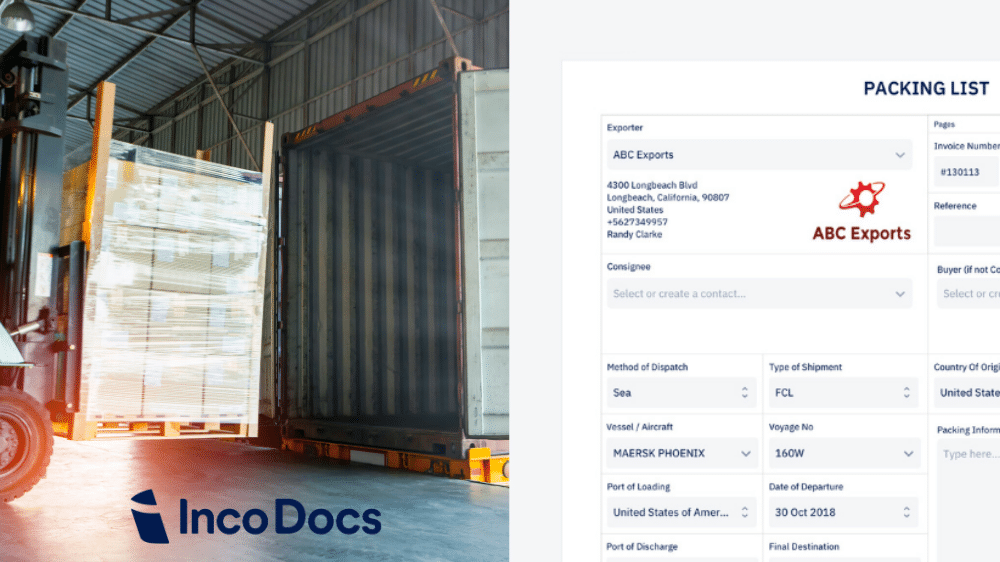
Digital packing lists can be exported to Excel or PDF. Some exporters use cloud-based systems that allow buyers and warehouse staff to access packing lists in real time.
Buyers can scan barcodes or QR codes on cartons, matching them to the digital packing list. This speeds up receiving and inventory.
Some exporters also send packing lists via email or attach them to shipping notifications. This ensures buyers receive the packing list before the shipment arrives.
A non-obvious insight: Digital packing lists allow easy changes if buyers update their order before shipment. Manual lists must be rewritten, but digital lists can be edited and re-sent quickly.
Handling Special Cases: Mixed Orders And Multiple Styles
Sometimes, buyers order multiple styles or colors in one shipment. The packing list must show each style separately.
For example, an order may include:
- Style 101: Men’s T-Shirts, Red
- Style 102: Men’s T-Shirts, Blue
Each style should have its own section with size breakdown. If colors are mixed in cartons, note this clearly. Failure to do so can confuse buyers and customs.
If cartons contain mixed styles, list each style and color in the packing list. Use clear labeling on cartons (e.g., “Carton 5: Style 101 – Red, Style 102 – Blue”).
Some buyers want separate packing lists for each style or color. Ask buyers for their preferred format to avoid confusion.
Another practical tip: For mixed orders, use different carton numbers or codes for each style. This makes tracking easier.
Credit: incodocs.com
Packing List For Garments: Compliance And Regulations
Exporters must follow regulations for packing lists. Some countries require specific information, such as:
- HS code (tariff code)
- Country of origin
- Value per item (sometimes)
Always check buyer country requirements. Missing information can delay customs clearance.
For more information on packing list regulations, see Packing List – Wikipedia.
Some countries require packing lists in their own language. Use translation services if needed.
If you ship to regulated markets (e. g. , EU, USA), include extra details like fiber content, brand, and compliance certificates.
How Size Breakdown Affects Inventory And Sales
The size breakdown is not only for shipping. It affects:
- Inventory management: Warehouses use size breakdown to store and track garments.
- Sales planning: Retailers need the right sizes to meet customer demand.
- Re-ordering: If certain sizes sell faster, buyers use packing list data to plan future orders.
Non-obvious insight: Some retailers analyze packing list size breakdown to identify trends in customer demand. If certain sizes are always short, they change their buying strategy.
For example, if medium shirts sell out faster than large, the retailer may request a higher ratio in the next order.
Packing lists also help stores plan sales and promotions. If there are too many small sizes, they may offer discounts to clear stock.
Packing List And Barcode Integration
Modern exporters often use barcodes on cartons. The packing list includes barcode numbers so buyers can scan cartons and match size breakdown instantly. This reduces human error and speeds up receiving.
Barcodes can include:
- Carton number
- Product code
- Size breakdown
This is especially helpful for large shipments. Warehouse staff scan cartons and compare data to the packing list.
Some exporters use QR codes that link to digital packing lists. Buyers scan the code and see all carton details on their phone or computer.
A practical tip: Include barcode numbers in the packing list for easy reference.
Packing List For Garments: Sustainability And Environmental Concerns
Some buyers now require eco-friendly packaging. The packing list may need to show:
- Type of packaging materials (recyclable, biodegradable)
- Weight of packaging vs. product
This helps buyers track their sustainability goals. Exporters who use eco-friendly packing lists can attract more buyers.
For example, if the packing list shows cartons made from recycled paper, buyers can report this in their sustainability reports.
Some buyers require certification for eco-friendly packaging. Include certificate numbers or references in the packing list.
Another non-obvious insight: Some buyers use packing list data to measure their carbon footprint. If cartons are lighter or more eco-friendly, they can report lower emissions.
Packing List And Quality Control
Before shipment, exporters must check cartons to ensure size breakdown matches the packing list. This is called quality control. Steps include:
- Randomly open cartons and count sizes.
- Match against packing list.
- Fix any mistakes before shipment.
Buyers may also inspect cartons on arrival. If there are errors, they can claim against the exporter.
Some exporters use third-party inspectors to check packing lists. This adds credibility and reduces disputes.
If quality control finds errors, update the packing list and re-pack cartons before shipping.
Advanced Packing List Tips For Exporters
- Use QR codes: Add QR codes to packing list for quick digital access.
- Automate calculations: Use software to avoid errors in size breakdown.
- Include carton photos: Attach images of cartons for visual confirmation.
- Share packing list early: Send to buyer before shipment for approval.
- Track shipment: Use packing list data to monitor shipment progress.
For high-value shipments, add security seals and note seal numbers in the packing list.
Some exporters include carton stacking instructions for freight forwarders.
Packing List And Customs Clearance: Real-world Challenges
Customs authorities are strict about packing lists. If the packing list does not match the shipment, problems include:
- Delays
- Fines
- Returned shipment
Some countries require packing lists in their own language or format. Always check requirements before exporting.
Customs may inspect cartons randomly. If they find errors, they may hold the shipment or charge fines.
A practical tip: Always update the packing list if you change packing after initial preparation. Do not ship with old packing lists.
Packing List And Insurance Claims
If garments are damaged or lost during shipment, the packing list is used to file insurance claims. The insurer checks:
- Quantity and size breakdown
- Value per item (sometimes)
- Carton numbers
A clear packing list speeds up insurance processing.
If you ship expensive garments, include extra details in the packing list (e. g. , serial numbers, batch numbers).
For insurance claims, attach photos of cartons and packing lists as proof.
Packing List For Garments: Role In E-commerce
E-commerce retailers often buy garments in many sizes. Packing lists help them:
- Track inventory
- Manage returns
- Analyze sales by size
Some e-commerce platforms require digital packing lists for easy integration.
Packing lists also help e-commerce sellers plan restocking and promotions. If certain sizes sell out, they can reorder quickly.
If you ship directly to customers, include packing list data on delivery notes.
Packing List And Buyer Communication
Buyers often have questions about size breakdown. Exporters should send packing lists early and answer questions quickly. Good communication builds trust and reduces disputes.
Some buyers request packing list samples before confirming orders. Share templates or previous packing lists to help buyers plan.
If buyers change their order, update the packing list and confirm changes in writing.
Packing List And Freight Forwarders
Freight forwarders use the packing list to:
- Plan cargo space
- Calculate shipping costs
- Track cartons
If the packing list is unclear, freight forwarders may make mistakes in loading or billing.
For example, if carton dimensions are missing, freight forwarders may under- or overestimate cargo space.
Always send packing lists to freight forwarders before shipment. This helps them plan transport and avoid delays.
Packing List For Garments: Tips For Beginners
If you are new to garment exporting, remember:
- Packing lists are not just paperwork—they are critical for smooth shipment.
- Always match size breakdown to buyer order.
- Double-check all calculations.
- Use clear, standard formats.
- Keep records for every shipment.
Many beginners forget to include size breakdown, leading to buyer complaints. Make this your top priority.
Ask buyers for their preferred packing list format. Some prefer digital lists, others want printed lists.
A practical tip: Save all packing lists and shipment records for at least two years. This helps resolve disputes and plan future orders.
Credit: incodocs.com
Packing List For Garments: Sample Checklist
Before finalizing your packing list:
- All buyer details included
- Invoice and shipment numbers listed
- Product description clear
- Carton numbers unique
- Quantity per carton correct
- Size breakdown matches buyer order
- Gross and net weight included
- Carton dimensions listed
- Total cartons and pieces calculated
- Packing list reviewed and checked
Use this checklist before every shipment to avoid errors.
Packing List And Warehouse Management
Warehouses use packing lists to:
- Store cartons by size
- Pick correct sizes for orders
- Track inventory movement
A clear packing list improves warehouse efficiency and reduces errors.
Some warehouses use digital packing lists and barcode scanners for faster processing.
Packing lists help warehouses plan space and organize stock by size and style.
Credit: www.marketsandmarkets.com
Packing List For Garments: Global Standards
Many global buyers use packing list standards such as GS1 or ISO. Exporters should learn these standards to meet buyer expectations.
For example, GS1 standards include barcode integration and standard data fields.
Using global standards helps exporters win more buyers and avoid disputes.
Some buyers require packing lists in specific formats. Ask buyers for their preferred format and follow global standards if possible.
Packing List For Garments: Common Questions From Buyers
Buyers often ask:
- Can I get the packing list before shipment?
- Is the size breakdown correct?
- Are all cartons labeled?
- Is the packing list digital?
- Are packaging materials eco-friendly?
Exporters should answer these questions clearly.
If buyers request changes, update the packing list and confirm changes before shipping.
Case Study: Packing List Error And Its Impact
In 2022, a major exporter shipped garments to Europe. The packing list had a size breakdown error—cartons packed with wrong sizes. The buyer complained, shipment was delayed, and the exporter paid fines and re-shipped goods.
Lesson: Always double-check size breakdown and match buyer order.
A practical tip: Create a system for checking packing list accuracy. Use digital tools and regular training to avoid costly mistakes.
Packing List For Garments: Future Trends
In the future, packing lists will become more digital and automated. Exporters will use:
- AI-powered packing list generators
- Digital integration with buyer systems
- Real-time tracking and updates
Buyers will expect faster, more accurate packing lists.
Exporters should invest in digital tools and training to stay competitive.
Frequently Asked Questions
What Is The Main Purpose Of The Export Packing List For Garments?
The export packing list shows what is inside each carton, including the size breakdown. It helps buyers, customs, and warehouse teams track and check shipments. It is essential for accurate delivery and smooth customs clearance.
How Does Size Breakdown Help Buyers And Warehouses?
Size breakdown tells buyers and warehouses exactly how many pieces of each size are shipped. This helps them plan sales, store inventory, and avoid shortages or overstock.
What Happens If The Size Breakdown In The Packing List Is Wrong?
If the size breakdown is wrong, buyers may get the wrong sizes, leading to complaints, returns, or lost sales. Customs may also delay or fine the shipment if the packing list does not match.
Can Packing Lists Be Digital Or Electronic?
Yes, many exporters use digital packing lists. These are easier to prepare, check, and share. Some buyers require digital lists for faster warehouse integration.
How Can Exporters Avoid Mistakes In Packing Lists?
Exporters should use standard formats, double-check calculations, match size breakdown to buyer orders, use software tools, and train staff. Careful preparation reduces errors and builds buyer trust.
Creating a clear, correct export packing list with size breakdown is vital for garment exporters. It ensures buyers get the right sizes, speeds up customs clearance, and avoids costly mistakes. With careful planning, digital tools, and strong communication, exporters can make their packing lists a strong foundation for successful shipments.