
Understanding Root Causes: The Complete Guide
Every problem has a starting point. Sometimes the issue you see is not the real problem—it is only a symptom. The root cause is the original reason a problem exists. If you fix only the symptoms, the problem comes back. If you solve the root cause, the issue usually goes away for good.
Understanding root causes is important in many areas: business, engineering, health, education, and even our personal lives. By learning how to find and fix root causes, we become better at solving problems completely—not just for now, but for the future too.
Many people try to fix problems quickly, but without understanding what started the problem, their fix does not last. Imagine painting over a crack in the wall without repairing the foundation. The crack returns. In life and work, people often repeat the same mistakes because they never look for the true reason behind their issues.
This guide will help you understand what root causes are, why they matter, and how to find them. You will see practical examples, learn about different methods, and get real tips to use in your own work or life. We will also look at common mistakes, and answer key questions at the end.
What Is A Root Cause?
A root cause is the main reason a problem happens. It is not always easy to see. Sometimes, there are many causes, but the root cause is the one that, if removed, stops the problem from happening again.
For example, imagine a company often delivers orders late. The symptom is the late delivery. But the root cause could be a broken machine, poor planning, or not enough staff. If you only ask workers to hurry, the problem may not go away.
But if you fix the broken machine, late deliveries might stop.
A root cause is sometimes hidden under layers of other problems. Think of a tree: you see the leaves and branches, but the roots are underground. If the tree is sick, the real reason may be in the roots, not the leaves.
Root cause analysis is the process of finding that main reason, so you can fix it.
Why Root Causes Matter
Solving root causes is important because:
- It prevents the problem from returning.
- It saves time and money in the long run.
- It improves quality and safety.
- It builds trust with customers and team members.
- It helps you learn from mistakes.
In some industries, like healthcare or aviation, finding root causes can even save lives.
When you solve the root cause, you often find related problems also disappear. For example, if a company has many customer complaints about delays, fixing the scheduling process can reduce complaints in other areas, like missing parts or staff stress.
A non-obvious benefit: Teams that focus on root causes usually become more open and creative. People feel safe to speak up about real issues rather than hide mistakes. Over time, this builds a culture of improvement.
Root Causes Vs. Symptoms
Many people confuse symptoms with causes. Here is a simple way to see the difference:
- Symptom: The thing you see or feel (e.g., a headache, a broken part, a mistake).
- Root Cause: The real reason the symptom happens (e.g., dehydration, poor design, lack of training).
If you treat only the symptom, the real problem stays hidden. If you solve the root cause, the symptoms often disappear.
For example, if your car makes a strange noise, turning up the radio hides the symptom, but the real problem (maybe a loose part) is still there. The noise is a warning sign. In business, a drop in sales is a symptom.
The root cause might be poor marketing or a new competitor.
Sometimes, symptoms can distract us from finding the true problem. For example, low team morale might seem like the problem, but the root cause could be poor management or unclear goals.
Common Types Of Root Causes
Root causes can be grouped in many ways. Here are some common types:
- Human Error: Mistakes made by people, often due to lack of training, stress, or poor communication.
- Process Problems: Issues in how work is organized or performed.
- Equipment Failure: Machines or tools that break or do not work as they should.
- Material Defects: Problems with the raw materials or parts used.
- Environmental Factors: Outside conditions like weather, temperature, or noise.
- Design Flaws: Problems in the way something was planned or built.
- Management Decisions: Choices made by leaders that create risks or weaknesses.
- Lack of Resources: Not enough time, money, staff, or equipment.
- Cultural Issues: Shared habits, values, or attitudes that lead to mistakes.
- External Events: Things outside your control, like natural disasters or sudden market changes.
Often, more than one type of cause is involved.
For instance, a delivery truck accident could have several root causes: driver fatigue (human error), unclear routes (process problem), poor weather (environment), and an overloaded truck (management decision). Solving only one may not prevent future accidents.
A non-obvious insight: Some root causes are hidden in company culture or unwritten rules. For example, if workers always rush to finish jobs, the root cause could be management rewarding speed over safety. This is harder to see but important to fix.
Root Cause Analysis: Step-by-step
Finding the root cause takes a careful process. Here are the key steps:
1. Define The Problem
Describe the problem clearly. Use facts, not opinions. Example: “Product X fails in 10% of cases during testing.”
Be specific about when, where, and how often the problem happens. Instead of saying, “We have quality issues,” say, “The red version of product Y fails during the final inspection on Mondays and Wednesdays. “
2. Collect Data
Gather information about when, where, and how the problem happens. Look for patterns. Ask questions like:
- When does the problem occur?
- How often does it happen?
- Who is involved?
- What is different when it does not happen?
Data may come from reports, interviews, observations, or logs. For example, you might find that errors only happen during night shifts, or only with one machine.
A non-obvious tip: Check for “negative data”—times when the problem does NOT happen. Ask, “What is different on days when things go well?”
3. Identify Possible Causes
Brainstorm all the reasons the problem could happen. Do not judge ideas yet—just list them.
Get different people involved. Those who do the work often know causes others miss. Use sticky notes or whiteboards so everyone can share ideas.
4. Analyze The Causes
Look for connections between events and causes. Use data to support your ideas. Try to see which causes are most likely.
You might group causes into categories, such as “people,” “process,” or “tools. ” This helps you see if one area is more likely to be the source.
5. Find The Root Cause
Ask “why? ” Several times. Go deeper each time. The root cause is usually at the end of the chain.
For example: Why did the order ship late? Because the product was not ready. Why? Because a part was missing. Why? Because the supplier did not deliver. Why? Because the order was not placed on time.
6. Develop Solutions
Think about ways to fix the root cause. Choose solutions that prevent the problem from happening again.
Solutions should address the real issue. For the example above, a solution could be setting up automatic ordering when stock is low, not just telling staff to “try harder. “
7. Implement And Monitor
Put your solution into action. Watch to see if the problem returns. If it does, repeat the process.
Track results over time. If the problem comes back, you may have missed something. Adjust your plan as needed.
Key Tools For Root Cause Analysis
Several tools can help you find root causes. Here are the most popular:
The 5 Whys
Ask “why? ” Five times (or as many as needed) to move from symptom to root cause.
Example:
- Problem: The car will not start.
- Why? The battery is dead.
- Why? The alternator is not working.
- Why? The alternator belt is broken.
- Why? The belt was old.
- Why? It was not replaced on time.
Root cause: Lack of regular maintenance.
A practical tip: Sometimes, the answer to each “why” leads to a different area (process, people, material). Be patient and keep asking until you find something you can control or change.
Fishbone Diagram (ishikawa Diagram)
This tool helps you look at all possible causes. You draw a “fishbone” shape, with the main problem at the head, and main cause categories (like people, process, equipment) as bones. Then you add possible causes to each category.
Fishbone diagrams are useful when problems have many possible causes. They work well in team meetings, helping everyone see the big picture.
Pareto Analysis
This uses the 80/20 rule: 80% of problems come from 20% of causes. You focus on the most common or biggest causes first.
Create a chart showing which causes happen most. Focus your energy on the top few—solving these will remove most of the symptoms.
Fault Tree Analysis
This uses a tree diagram to show how problems lead to each other. It helps you see the chain of events.
Start with the main problem at the top and split into branches showing different paths that could lead to the failure. This is good for complex or safety-critical systems.
Scatter Diagrams
These show the relationship between two factors, to see if they move together (correlation).
For example, you might plot “errors per day” against “number of staff working” to see if fewer staff means more errors.
Root Cause Matrix
You list causes on one side and evidence on the other, then check which causes are most supported.
This tool is good for sorting through lots of data and helps teams agree on the most likely root cause.
Real-world Examples
Let’s look at some examples of root causes in different fields.
Manufacturing
A factory finds that many products fail the quality test. The symptom is failed products. Using the 5 Whys, they find the root cause is a machine that is not calibrated. They fix the machine, and failures drop.
In another case, a company had lots of scrap material. The symptom was waste. The root cause was found to be incorrect machine settings after shift changes. The solution: better shift handover instructions.
Healthcare
A hospital notices many patients get infections after surgery. The symptom is infection. Investigation shows the root cause is staff not washing hands correctly. Training and reminders reduce infections.
Sometimes, root cause analysis finds deeper issues, like lack of soap dispensers in key locations or unclear cleaning schedules.
It And Software
A website crashes often. The symptom is downtime. Analysis shows the root cause is a memory leak in the software. Developers fix the code, and the site becomes stable.
In another example, a company had repeated data entry mistakes. The root cause was found to be a confusing screen layout. Redesigning the software lowered errors.
Education
Test scores are falling in a school. The symptom is low grades. The root cause is found to be outdated teaching materials. Updating the curriculum improves results.
Sometimes, the real cause is not obvious. For example, high absenteeism may be due to bullying or poor classroom environment.
Personal Life
A person feels tired every day. The symptom is tiredness. After asking why, they find the root cause is not enough sleep due to late-night phone use. Setting a bedtime helps them feel better.
Another example: Arguments at home might be a symptom. The root cause could be stress from work, not the actual topic of the argument.
Data Table: Root Cause Examples By Industry
Below is a comparison of root cause types across industries:
| Industry | Common Symptom | Typical Root Cause |
|---|---|---|
| Manufacturing | Product defects | Equipment misalignment |
| Healthcare | Patient errors | Poor communication |
| IT | System crashes | Software bugs |
| Education | Low test scores | Outdated materials |
| Retail | Stockouts | Bad inventory tracking |
Looking at patterns across industries helps teams spot common causes and share solutions.
Root Causes In Business
In business, solving root causes can lead to big gains. For example:
- Higher profits: By stopping waste or mistakes, companies save money.
- Better customer loyalty: Fixing root problems makes customers happier.
- Safer workplaces: Finding the real reason for accidents can prevent them.
A survey by the American Society for Quality found that companies who use root cause analysis save an average of $50,000 per problem solved.
Businesses often use root cause analysis after audits, customer complaints, or near-misses. For example, a retail chain saw high employee turnover. Root cause analysis showed poor training and unclear job roles. Improving orientation programs reduced turnover by 25%.
Another example: A restaurant received many negative reviews about slow service. The root cause was not lazy staff, but a kitchen layout that slowed food prep. Rearranging equipment improved speed and customer ratings.
Root Causes In Health
In health, root causes are often hidden. A symptom like a cough could come from many sources: allergies, infection, or pollution. Doctors use tests and questions to find the real reason.
One non-obvious insight: Sometimes, treating only symptoms (like giving cough syrup) can make the real problem worse. For example, covering up a cough without checking for pneumonia can be dangerous.
Another example is in public health. High rates of heart disease may be traced to root causes like poor diet, lack of exercise, or stress. Fixing these root causes can save lives and money.
Health professionals use the “differential diagnosis” method, which is similar to root cause analysis, to rule out possible causes until they find the main one. For example, if a child has repeated stomach pain, doctors ask about food, stress at school, or infections before deciding on treatment.

Credit: www.scribbr.com
Root Causes In Engineering
Engineers often use root cause analysis after an accident or failure. For example, after a bridge collapse, teams look for the root cause: Was it poor design, bad materials, or overload?
A famous case is the Challenger Space Shuttle disaster. The symptom was the explosion. The root cause was an O-ring seal that failed in cold weather. If the investigation had stopped at the explosion, the real reason would not have been fixed.
Engineers document each finding and share lessons across the industry. This helps prevent repeating the same mistake in future projects. For example, after the Tacoma Narrows Bridge collapse, engineers around the world learned about wind effects on bridges.
Comparing Root Cause Analysis Methods
Which method should you use? It depends on the problem.
| Method | Best For | Strength | Limitation |
|---|---|---|---|
| 5 Whys | Simple problems | Quick and easy | May miss complex issues |
| Fishbone Diagram | Team brainstorming | Visual structure | Needs good facilitation |
| Pareto Analysis | Many problems at once | Focus on big impact | Needs data |
| Fault Tree | Complex systems | Shows cause links | Can be slow |
For example, if you have a simple recurring issue (like late reports), the 5 Whys may be enough. If you have a complex safety failure, a fault tree may show all the interacting causes.
Root Causes And Human Behavior
Human actions are a common root cause, but often, the problem is deeper. For example, if a worker makes a mistake, ask why:
- Were they trained?
- Was the process clear?
- Were they tired or distracted?
- Did they have the right tools?
Blaming people without looking deeper is a mistake. Often, systems or environments cause human errors.
For example, if workers skip steps, the root cause might be that the process is too complex or takes too long. Simplifying the process may solve the problem better than more training.
A non-obvious insight: Sometimes, rewards or punishments in the system push people to act in risky ways. For example, if workers are paid by speed, they may skip safety checks.
Root Causes And Culture
Sometimes, the way people think and act together—the culture—is the root cause. For example, if a company ignores safety rules, accidents happen. If leaders reward speed over quality, mistakes increase.
Changing culture is hard, but it is sometimes the only way to fix root causes.
Culture can be shaped by stories, traditions, and what leaders say and do. For example, if managers always tell workers to “just get it done,” people may take shortcuts. Changing culture may need new policies, training, and role models.
A non-obvious tip: Surveys and interviews can help reveal hidden cultural issues. Listen to what people say in private, not just in meetings.
Root Cause Analysis: Common Mistakes
Even experts can make mistakes. Here are some to watch for:
- Stopping too soon: Accepting the first answer, not digging deep enough.
- Blaming individuals: Not looking at the process or system.
- Lack of data: Guessing instead of using facts.
- Poor follow-up: Not checking if the solution works.
- Ignoring small causes: Overlooking minor issues that add up.
A non-obvious insight: Sometimes, there is more than one root cause. Fixing only one part may not solve the full problem.
For example, fixing the machine but not training the operator may not stop defects. Check for all main causes before ending the analysis.
Another mistake: Focusing only on what is easiest to fix. Sometimes, the real root cause is harder to change—but more important.
Case Study: Airline Safety
Airlines use root cause analysis for every accident and near-miss. For example, if a plane almost lands on the wrong runway:
- Symptom: Wrong approach.
- Root cause: Poor signage and unclear instructions from air traffic control.
By fixing both, they prevent future problems.
Data shows that since the 1980s, better root cause analysis has helped reduce major airline accidents by more than 80%.
Airlines share findings with all staff and other airlines. They use checklists, simulations, and regular training to keep improving. For example, after learning that tired pilots make mistakes, airlines changed schedules and added rest periods.
Root Cause Analysis In Project Management
Projects often fail for repeat reasons. Common symptoms are delays, budget overruns, or missed goals. Root causes include:
- Poor planning
- Unclear requirements
- Lack of communication
- Over-optimism
Project managers use root cause tools after each project to learn and improve.
Teams may hold “lessons learned” meetings to review what went wrong and why. For example, if a project missed deadlines, root cause analysis might reveal unclear goals or shifting priorities. Next time, they can write clearer plans and set firm priorities.
A non-obvious tip: Use anonymous surveys to get honest feedback about root causes from the whole team.
Root Causes In Software Development
Software bugs are often symptoms. The root cause could be:
- Bad code
- Misunderstood requirements
- Rushed deadlines
- Lack of testing
Teams use bug tracking systems and root cause analysis to reduce repeat errors. For example, if users always find the same type of bug, the root cause may be poor training for new developers.
Some teams run “post-mortems” after big bugs or outages to find and fix root causes. They share results openly so everyone learns.
A practical example: A company noticed login failures after each update. Root cause analysis showed that updates were not tested on all browsers. Adding browser testing fixed the issue.
The 5 Whys: A Closer Look
The 5 Whys is simple but powerful. Here are tips to use it well:
- Involve the right people (those who know the work).
- Be honest. Do not hide mistakes.
- Write down each answer.
- Stop when you reach a process or system issue, not just a person.
A non-obvious insight: Sometimes, you need more than five whys. The goal is not the number, but to reach the real root.
For example, if you keep coming back to “lack of training,” ask why training was missing. Maybe the schedule was too busy, or there was no budget. Keep asking until you find something you can change.
Fishbone Diagram: How To Use
- Write the main problem at the head.
- Draw a horizontal line (the backbone).
- Draw diagonal lines (bones) for each main cause area: People, Process, Equipment, Materials, Environment, Management.
- Add possible causes to each bone.
- Discuss and find the root cause.
Fishbone diagrams are good for group work, as they show all ideas visually.
Practical tip: Use sticky notes for causes so you can move and group them easily. Review the diagram as a team and vote on the most likely root causes.
Pareto Analysis: Focus On The Vital Few
If you have many problems, Pareto analysis helps you pick the most important. Steps:
- List all problems.
- Count how often each happens.
- Rank from most to least common.
- Focus on the top issues first.
Often, fixing a few root causes removes most of the trouble.
For example, a call center found that 60% of complaints came from two issues: billing errors and slow service. By fixing these, overall complaints dropped sharply.
Fault Tree Analysis: Handling Complexity
This tool is used when systems are complex (like in space or nuclear industries).
- Start with the main problem at the top.
- Break it into direct causes below.
- Keep dividing until you reach root causes.
Fault trees show how small problems can build up to big failures.
A non-obvious tip: Use fault trees to plan for “what if” scenarios and build safer systems before problems happen.

Credit: www.ir.com
Root Causes And Continuous Improvement
The best organizations do not stop after one analysis. They use root cause analysis all the time. This is part of continuous improvement (like Lean, Six Sigma, or Kaizen).
- Problems are seen as learning opportunities.
- People are rewarded for finding and fixing root causes.
- Data is used to track progress.
This approach leads to steady gains over time.
For example, car makers use continuous root cause analysis to reduce defects every year. Over time, this leads to fewer recalls and happier customers.
Root Causes In Customer Service
Customer complaints are symptoms. Root causes might be:
- Poor product design
- Bad website navigation
- Untrained staff
Solving root causes leads to happier customers and fewer complaints.
Example: A bank finds many users call about password resets. Root cause: The process is confusing. They redesign the login flow, and calls drop by 40%.
Another example: An online shop received many returns. Root cause analysis showed unclear sizing charts. Adding better charts reduced returns.
Root Causes In Supply Chain
Supply chain failures are costly. Symptoms include late deliveries, missing products, or damaged goods. Root causes can be:
- Poor supplier choices
- Bad forecasting
- Weak tracking systems
After the COVID-19 pandemic, many companies used root cause analysis to build more reliable supply chains.
A practical example: A company found frequent stockouts. The root cause was that reorder points were set too low. Adjusting them improved availability.
Data Table: Comparing Symptoms And Root Causes
This table shows how symptoms and root causes differ in various areas.
| Area | Symptom | Possible Root Cause |
|---|---|---|
| Website | Slow pages | Poor server setup |
| Workplace | High turnover | Poor management |
| School | Low engagement | Boring lessons |
| Retail | Empty shelves | Ordering errors |
These examples show the value of looking deeper than what you first see.
How To Build A Root Cause Mindset
Solving root causes is not just a tool, but a way of thinking.
- Always ask “why?” When a problem appears.
- Look for patterns, not just one-off events.
- Value facts over opinions.
- Involve people at all levels.
- Reward finding and fixing root causes, not just quick fixes.
A non-obvious tip: Share success stories when root cause analysis leads to big improvements. This encourages others to use the same approach.
Root Causes And Change Management
When you fix a root cause, you often need to change how things are done. This can be hard. Tips for success:
- Communicate clearly about why the change is needed.
- Involve those affected in the solution.
- Give training and support.
- Monitor results and adjust as needed.
A non-obvious insight: Sometimes, fixing one root cause creates new problems. Watch for side effects.
For example, speeding up production might cause more defects. Test changes carefully and get feedback from users.
Root Causes In Safety
Workplace accidents often have deep root causes:
- Lack of safety training
- Rushed schedules
- Poor equipment maintenance
By finding and fixing these, companies reduce injuries and insurance costs. For example, a mining company reduced accidents by 30% after root cause analysis led them to improve lighting and worker breaks.
Good safety systems include regular root cause reviews after every incident, even if no one is hurt.
Root Causes In Quality Control
In quality control, the aim is zero defects. Every failure is a chance to find a root cause. Common tools are control charts, 5 Whys, and fishbone diagrams.
A non-obvious tip: Over time, root cause analysis helps you predict and prevent problems before they happen.
For example, tracking small trends in defects can warn you before a big failure happens.
Root Causes In Environmental Problems
Many environmental issues have hidden root causes:
- Air pollution symptoms: Smog, breathing problems
- Root causes: Car emissions, factory smoke
Solving the root cause often means changing systems, not just cleaning up after problems.
For example, cities that switch to cleaner buses and bikes reduce air pollution more than just warning people to stay inside.
Root Causes In Relationships
Even personal relationships have root causes for problems. For example:
- Symptom: Frequent arguments
- Root cause: Lack of communication or stress from outside work
Knowing the root cause can help couples or friends solve issues instead of fighting about small things.
A practical tip: Ask open questions and listen carefully. Sometimes, the real cause is hidden feelings or outside pressures.
Root Causes In Finance
Financial problems may show as missed payments or debt. Root causes can be:
- Poor budgeting
- Unexpected expenses
- Lack of savings
Financial advisors help clients find and fix these root causes for lasting stability.
For example, teaching clients to track spending and save for emergencies can prevent future problems.
Root Causes In Education
Student failure rates are a symptom. Root causes can include:
- Unclear instructions
- Lack of support at home
- Large class sizes
Schools that analyze and fix these root causes see better results.
For example, one school reduced dropouts by adding after-school tutoring and support for parents.
How To Train Teams In Root Cause Analysis
Training is key to success. Here’s how to start:
- Teach the basics (differences between symptoms and causes).
- Show common tools (5 Whys, fishbone, etc. ).
- Practice with real examples.
- Review and learn from mistakes.
- Reward good analysis.
A tip: Use simple language and real data from your own workplace for best results.
Encourage teams to share what they learn and support each other. Over time, everyone gets better at finding and fixing root causes.
Root Cause Analysis And Technology
New tools use artificial intelligence and data analytics to help find root causes faster. For example, AI can scan thousands of support tickets to spot patterns humans miss.
But human judgment is still needed. Machines can find patterns, but people must decide what to fix.
For example, AI may spot that most complaints happen on weekends, but humans must investigate why.
A practical tip: Use technology to collect and organize data, but always discuss findings with people who know the work.
Root Causes In Product Design
When products fail, designers must find the real reason:
- Is it a design flaw?
- Is it a bad material?
- Is it user error (and why)?
Root cause analysis after product launches saves money and reputation.
Example: A phone manufacturer found that most returns were due to confusing instructions, not defects. Rewriting the manual cut returns in half.
Another example: A toy company received complaints about broken pieces. Root cause analysis showed that packaging was too tight, causing stress on the toys. Changing the packaging solved the issue.
Root Causes In Legal Cases
Lawyers use root cause analysis to understand disputes. For example, a contract dispute might show a symptom (missed deadline), but the root cause could be unclear terms or communication gaps.
By fixing the root cause, future lawsuits are avoided.
Legal teams often review contract language, training, and communication processes after disputes.
Root Causes In Government Policy
Bad outcomes (like poverty or crime) have deep root causes: lack of education, poor health care, or bad laws. Policymakers use data and analysis to find and address these.
A non-obvious insight: Sometimes, root causes are complex and need long-term action, not quick fixes.
For example, reducing crime often means improving schools, job opportunities, and social support, not just adding police.
How To Communicate Root Cause Findings
Clear communication is key. Tips:
- Use simple language.
- Show data and evidence.
- Explain the impact of the root cause.
- Suggest clear actions.
Example: Instead of saying “The process is broken,” say “Data shows that missing steps in order entry cause 70% of shipping delays.”
Share stories and examples to help people understand the real problem.
Root Causes And Ethics
Sometimes, the root cause is an ethical issue: cutting corners, hiding mistakes, or ignoring warnings. Fixing these means changing values, not just processes.
Companies with strong ethics have fewer repeat problems.
For example, a firm that encourages staff to report issues early can fix small root causes before they grow.
Root Causes In Sports
Teams use root cause analysis to improve. For example:
- Symptom: Frequent injuries
- Root cause: Poor training methods or overwork
Fixing these root causes leads to better performance.
Teams may review game footage and training logs to find patterns and adjust routines.
When Root Cause Analysis Fails
Sometimes, efforts fail. Reasons include:
- Not enough data
- Stopping too soon
- Not involving the right people
- Resistance to change
A non-obvious tip: If you keep having the same problem, your root cause analysis may need to go deeper.
Ask for outside help or look at the issue from a new angle.
Root Cause Analysis In Crisis
In a crisis (like a recall or accident), fast root cause analysis is key. Teams work together to:
- Find the immediate cause (stop the problem)
- Dig for the deeper root cause
- Make changes to prevent repeat
Example: After a food recall, root cause analysis found a supplier error. The company changed suppliers and improved checks.
Quick action saves lives and protects reputation.
Root Causes And Regulation
Regulators often require root cause analysis after violations or incidents. For example, food and drug companies must show how they will prevent future problems.
Following these rules is not just about avoiding fines—it keeps people safe.
For example, after a contamination event, companies must show steps to prevent it from happening again.
Root Causes And Innovation
Solving root causes leads to new ideas. For example, if customers complain about slow service, the root cause may be an old system. By fixing it, a company can leap ahead of rivals.
A non-obvious insight: Sometimes, the root cause is an opportunity, not just a problem.
For example, finding that users want more features can lead to a new product line.
Root Causes And Sustainability
For long-term success, organizations must look for root causes that affect the planet and society. For example:
- Symptom: High energy costs
- Root cause: Old equipment
By upgrading, companies save money and reduce pollution.
Sustainability teams use root cause analysis to find ways to cut waste, improve recycling, and use resources better.
How To Review Root Cause Analysis
Regular review is important. Checklist:
- Was the real root cause found?
- Was the solution put in place?
- Did the problem stop?
- Were there any side effects?
- What can we learn for next time?
Share reviews with all staff, not just managers, so everyone learns.
Root Causes In Communication
Miscommunication is a common symptom. The root cause could be:
- Language barriers
- Missing information
- No feedback
Fixing these improves teamwork and results.
For example, using clear templates and repeat-backs can prevent errors.
The Role Of Leadership
Leaders set the tone. If leaders support finding root causes, teams feel safe to speak up. If not, problems stay hidden.
Good leaders ask questions, listen, and act on findings.
A non-obvious tip: Leaders should join root cause analysis sessions to show support and learn about real problems.
Root Causes In Change Failure
Many change efforts fail. Common root causes:
- No clear vision
- Lack of training
- Poor communication
By fixing these, more changes succeed.
For example, before starting a big change, check that everyone understands why and how it will happen.
Root Causes In Global Issues
Big problems like climate change or poverty have many root causes: policy, economics, culture, and more. Solutions need teamwork and persistence.
A non-obvious insight: Sometimes, working on small root causes can create big change over time.
For example, teaching children about recycling can reduce waste for years to come.
Practical Tips For Root Cause Analysis
- Start with facts, not guesses.
- Use more than one tool.
- Involve different people.
- Be patient—deep problems take time.
- Celebrate successes.
A practical tip: Keep a “root cause log” to track what you find and what works. This helps you improve over time.
How To Measure Success
Look for:
- Fewer repeat problems
- Better results (quality, safety, profit)
- Happier customers and staff
- Lower costs
Track these over time to see improvement.
If results do not improve, review your analysis and try again.
Root Causes In Mental Health
Symptoms (anxiety, depression) often have deep root causes: stress, trauma, or biology. Treating only symptoms may not help long-term. Therapists use root cause analysis to find and heal deeper issues.
A non-obvious insight: Healing root causes can take time and may need support from family, friends, or professionals.
Root Causes In Technology Failures
Tech failures can be costly. For example, a data breach may have a root cause in weak passwords, poor training, or outdated systems. Companies invest in root cause analysis to prevent future attacks.
A practical tip: Regular security reviews and staff training can fix root causes before hackers find them.
Root Causes In Agriculture
Poor crop yields are symptoms. Root causes can be:
- Bad soil
- Wrong seeds
- Pests
Farmers use root cause analysis to increase food production and reduce losses.
For example, testing soil and rotating crops can solve problems before they grow.
Root Causes In Logistics
Late deliveries often stem from:
- Bad routing
- Traffic
- Poor planning
Fixing these saves money and boosts customer trust.
A non-obvious tip: Using GPS and data analytics helps spot and fix the real causes of delays.
Continuous Learning From Root Causes
The best organizations learn from every mistake. They keep records, review cases, and share lessons. Over time, this builds a strong, problem-solving culture.
A practical example: Hospitals hold regular meetings to discuss errors and what was learned. This helps everyone get better.
Root Causes And Employee Engagement
Low engagement is a symptom. Root causes can be:
- Lack of recognition
- Poor management
- No growth opportunities
Fixing these keeps teams motivated and loyal.
A non-obvious tip: Ask employees directly what would help them feel more engaged.
Using External Resources
Learning from experts can help. For more, see the Wikipedia entry on Root Cause Analysis.
Frequently Asked Questions
What Is A Root Cause?
A root cause is the main reason a problem happens. If you remove it, the problem will not return. It is different from symptoms, which are what you see or feel.
How Do You Find The Root Cause Of A Problem?
Use a structured process: define the problem, collect data, list possible causes, analyze them, and keep asking “why?” until you reach the real reason. Tools like the 5 Whys and fishbone diagrams can help.
Why Is It Important To Fix The Root Cause And Not Just The Symptoms?
Fixing only symptoms means the problem can come back. Solving the root cause removes the problem for good, saves time and money, and improves quality and safety.
What Tools Can Help With Root Cause Analysis?
Common tools are the 5 Whys, fishbone diagram, Pareto analysis, fault tree analysis, and scatter diagrams. Choose the tool that fits your problem’s size and complexity.
Can There Be More Than One Root Cause?
Yes, sometimes problems have more than one root cause. For lasting results, try to find and fix all the main causes, not just one.
Solving root causes takes time and effort, but it leads to better results in work, health, and life. With practice, you can become skilled at finding and fixing the real reasons behind any problem.
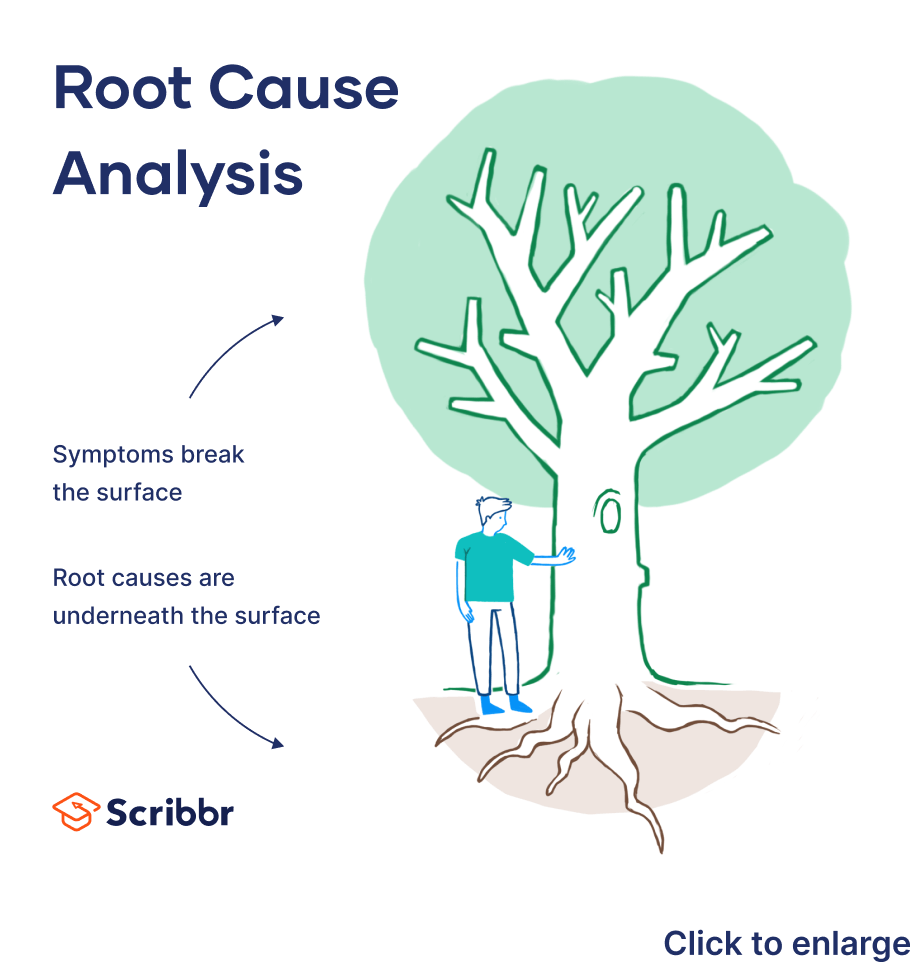
Credit: www.scribbr.com